
Dressed for the World Thomy Is Building
Human: Tomás de Almeida | Lisbon, Portugal
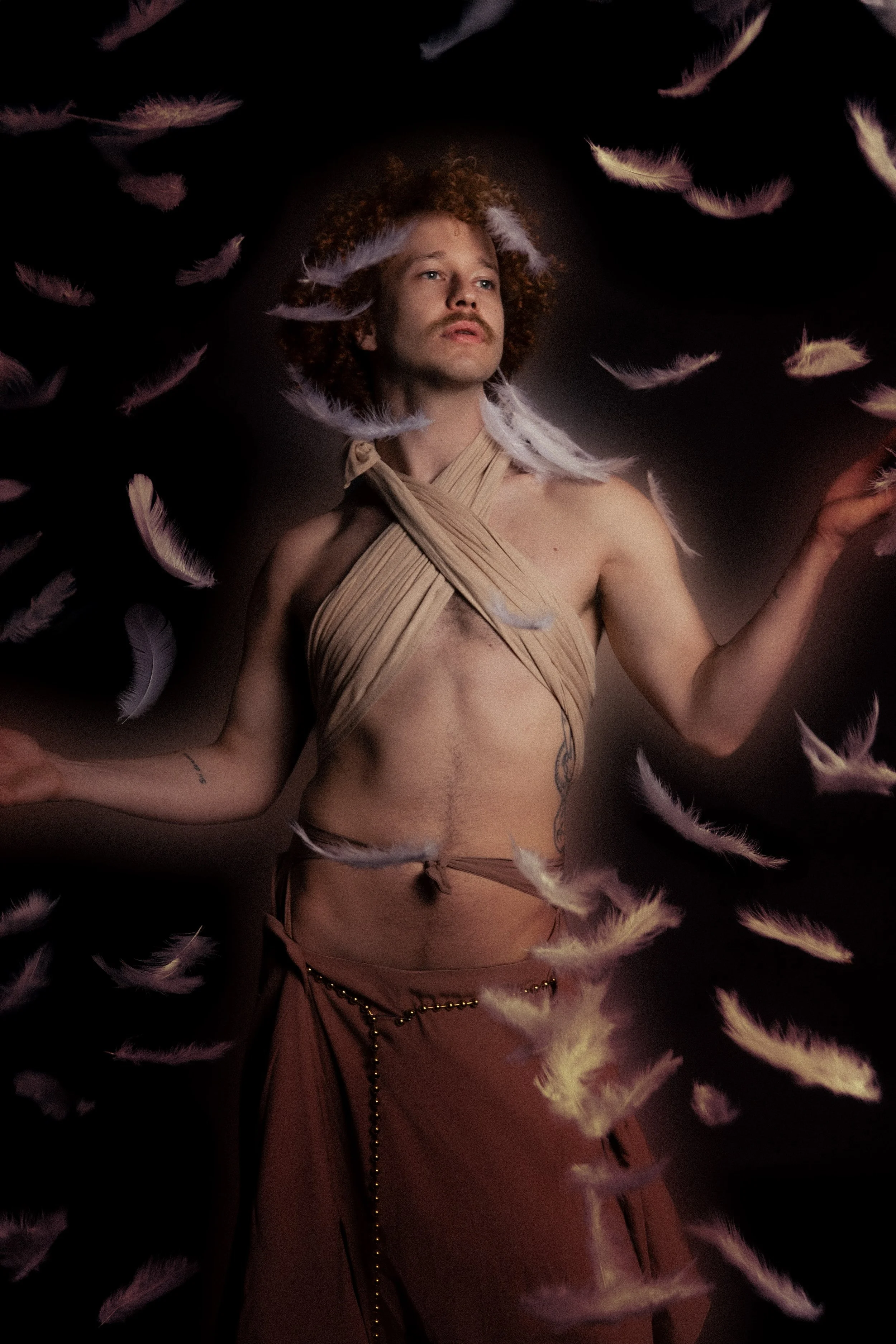
For Thomy, fashion is not something reserved for the stage, the studio, or the editorial page. It belongs in motion. It belongs underground, between train platforms and tiled corridors, in the ordinary rhythm of a city that has not always known what to do with people who refuse to disappear.
[ EN ]In Lisbon, Thomy has turned the metro into something more than public transit. Through full looks, sharp presence, and an instinct for theatricality, he transforms everyday movement into performance. But what makes the work compelling is not simply the clothing. It is the insistence behind it. The refusal to treat visibility as an event. For Thomy, showing up this way is not a costume change before entering the world. It is the world itself.Growing up in a conservative Catholic environment in Portugal, self-expression came with consequence. Even something as small as colored pants or a tighter shirt could become a reason for exclusion. But instead of shrinking, Thomy learned to question the rules around him. Why could he not wear what he wanted? Why was desire policed? Why was difference treated as something shameful?“I’d say it was the only option I had,” he says. “It was the only truth I wanted to live.”That truth now moves through his work with force. His videos may begin with fashion, but they quickly become something wider: a declaration of presence for those still learning how to occupy space. Thomy understands what it means to grow up without queer references, without someone visible enough to say, directly or indirectly, that another life is possible. “I grew up literally thinking I was the only person like this in the world,” he recalls. That loneliness still informs the tenderness of what he creates.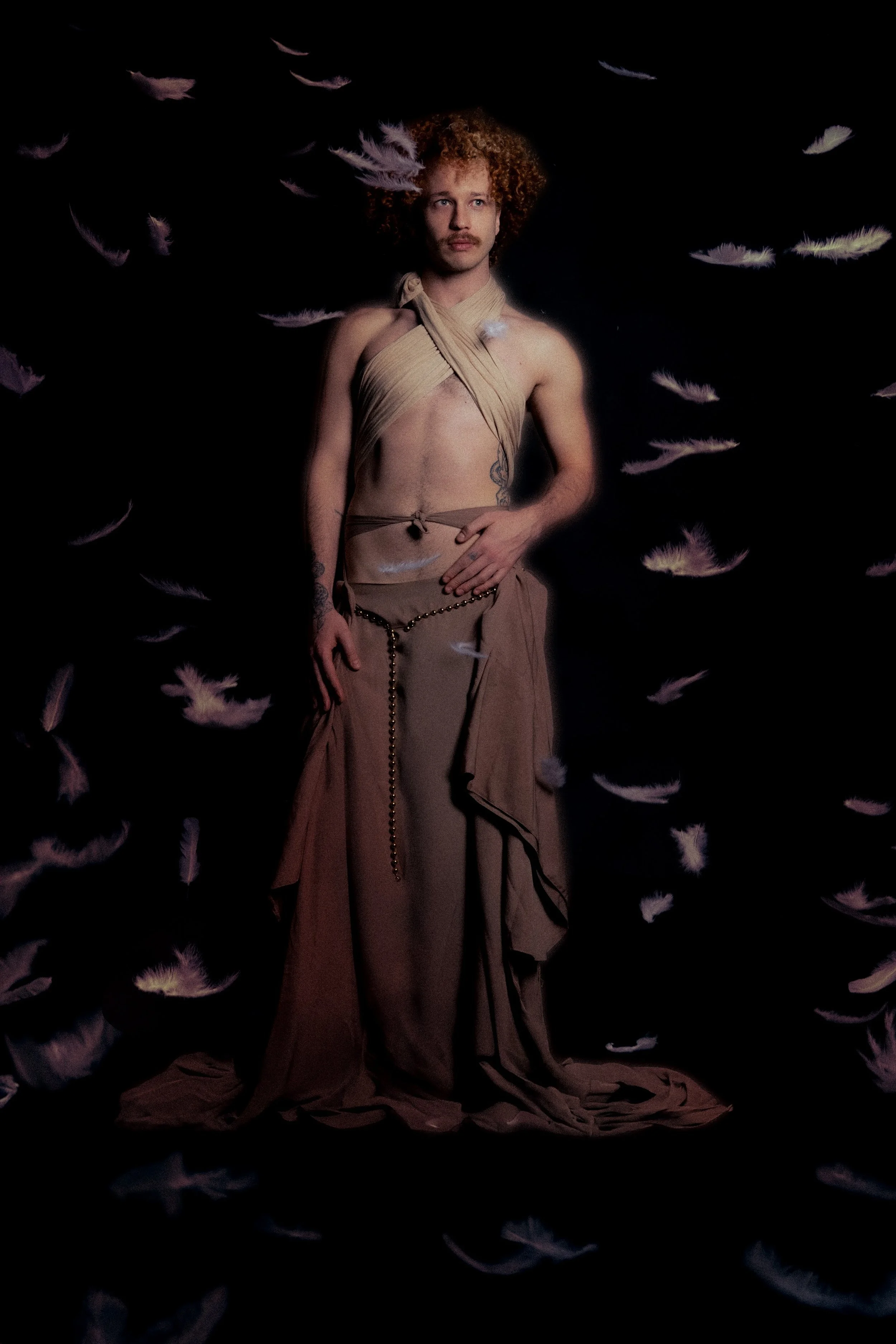
When queer people see him walking through Lisbon in full expression, the message is not abstract. It is immediate: we exist, and we are here.There is also something deeply intentional about his attachment to the city. Lisbon is not merely a backdrop. It is home, even when it has not always offered love in return. “I don’t want to leave until it’s tidy and decorated exactly how I want it,” he says. The line is playful, but beneath it sits a serious creative mission. Thomy is not escaping Portugal to find freedom elsewhere. He is helping build a version of Portugal where freedom can stay.His relationship to fashion began, in many ways, through necessity. In a world that offered limited permission, he had to invent. He remembers cutting T-shirts and polos in his room, shaping fabric around his body, pinning pieces into skirts and dresses. What began as private experimentation became a lifelong language. “I often say I wouldn’t be who I am if fabrics and safety pins didn’t exist,” he says.That instinct remains central to his aesthetic. Second-hand pieces become editorial. Found garments become fantasy. The ordinary becomes charged with possibility. Thomy does not only dress from himself; he dresses from what he observes. The people passing through the metro, the rhythm of the corridors, the compressed movement of a city in transit. To him, the runway was not something he imposed onto the metro. It was already there. He simply decided to start filming.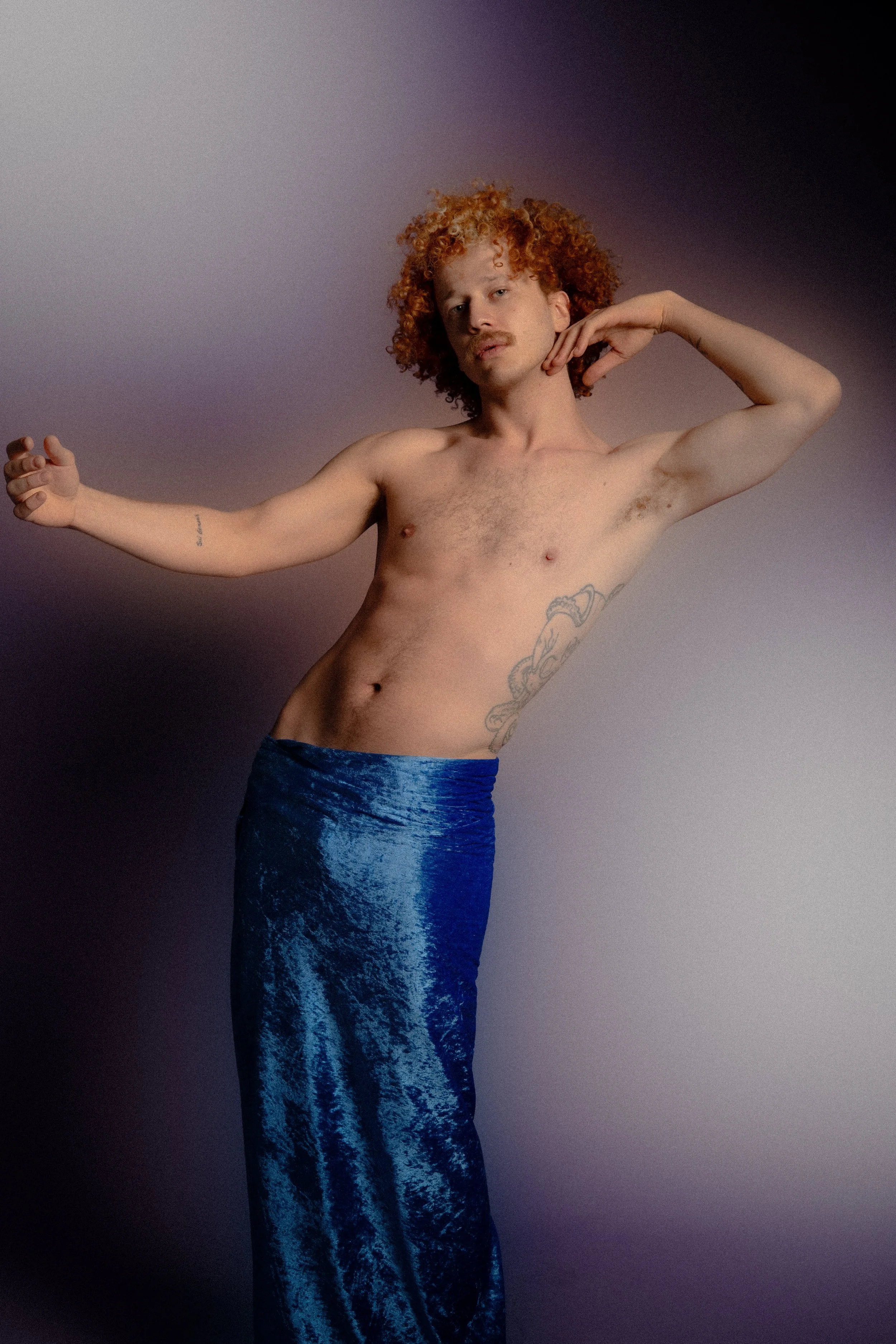
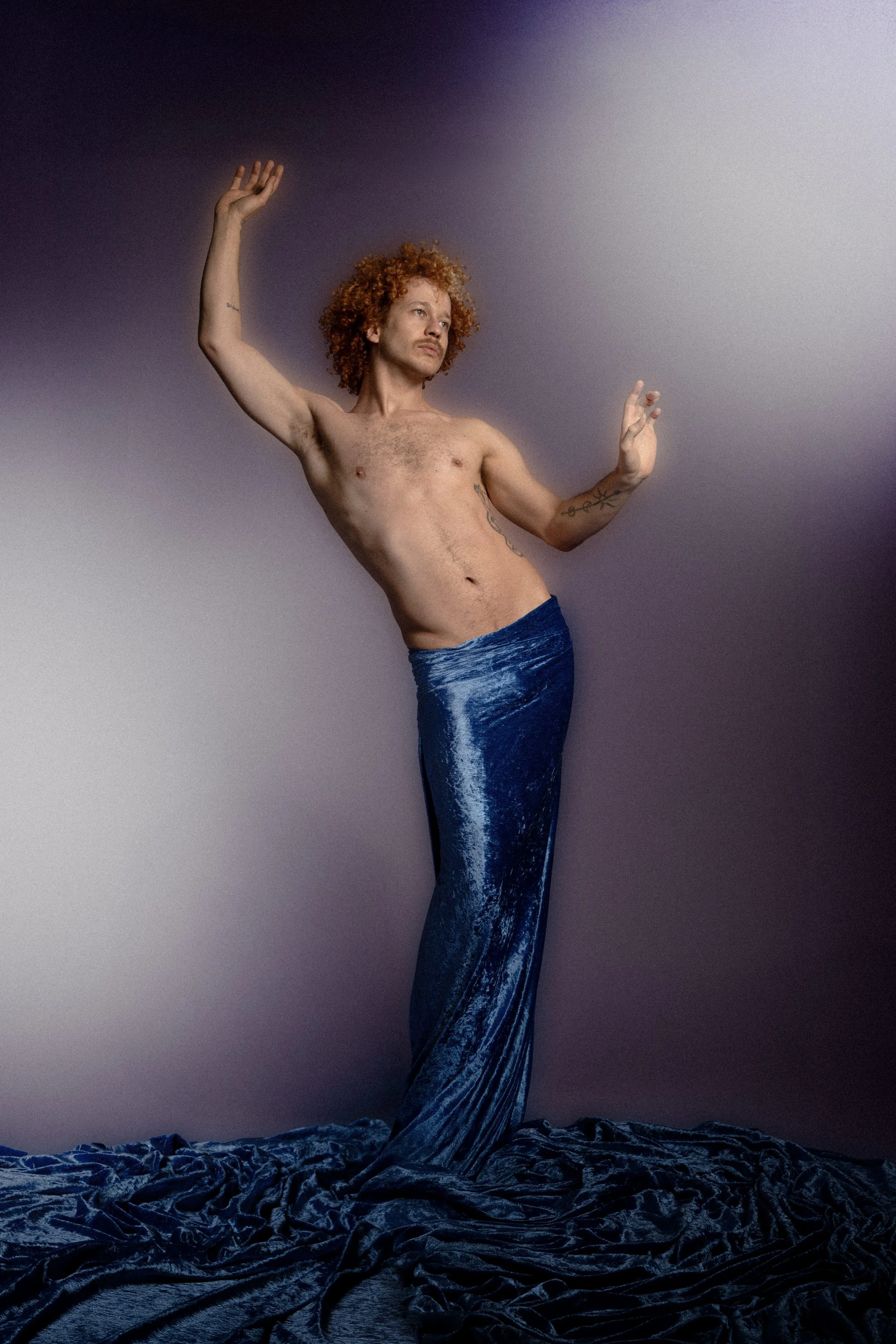
His background in acting and design sharpens that visual language. Each look begins not only with garments, but with persona. A mood. A character drawn from some part of himself. “Being an actor is exactly that: wearing various human layers,” he says. In Thomy’s world, fashion becomes a literal layering of self: emotional, theatrical, protective, exposed.That tension between armor and vulnerability sits at the heart of his work. Dressing up protects his energy, but it also makes him more visible. It shields him by revealing him. “It’s almost like protecting myself through vulnerability,” he says. This is what gives his presence its charge. It is not visibility emptied into spectacle. It is visibility with memory behind it.For Thomy, queer excellence is not about polish or individual attention. It is about existing without apology. It is turning what was once hidden into something worthy of celebration. It is walking through Lisbon exactly as he is, loving freely, creating freely, and making someone else feel “safe, beautiful, and possible.”“I’d say it was the only option I had. It was the only truth I wanted to live.”
That phrase may be the clearest articulation of what his work does. It does not simply challenge rigid masculinity or expand the language of fashion, though it does both. It creates permission. Not softly. Not passively. But through the active occupation of public space.The queer Portugal Thomy is helping shape is not new because queer people have suddenly arrived. It is new because more of them are refusing silence. “We’ve always existed,” he says. “We just weren’t always allowed to be seen.”And in the images he creates for ICONIQA, that visibility becomes emotional. Almost childlike in its freedom. The kind of freedom that remembers what it felt like to imagine the world before the world taught you limitation. Thomy wants people to feel beauty, but also humanity. To see the dreamer behind the image. The artist in love with people, movement, fabric, and possibility. Above all, he hopes someone looks at the work and thinks: “I can also exist like this.”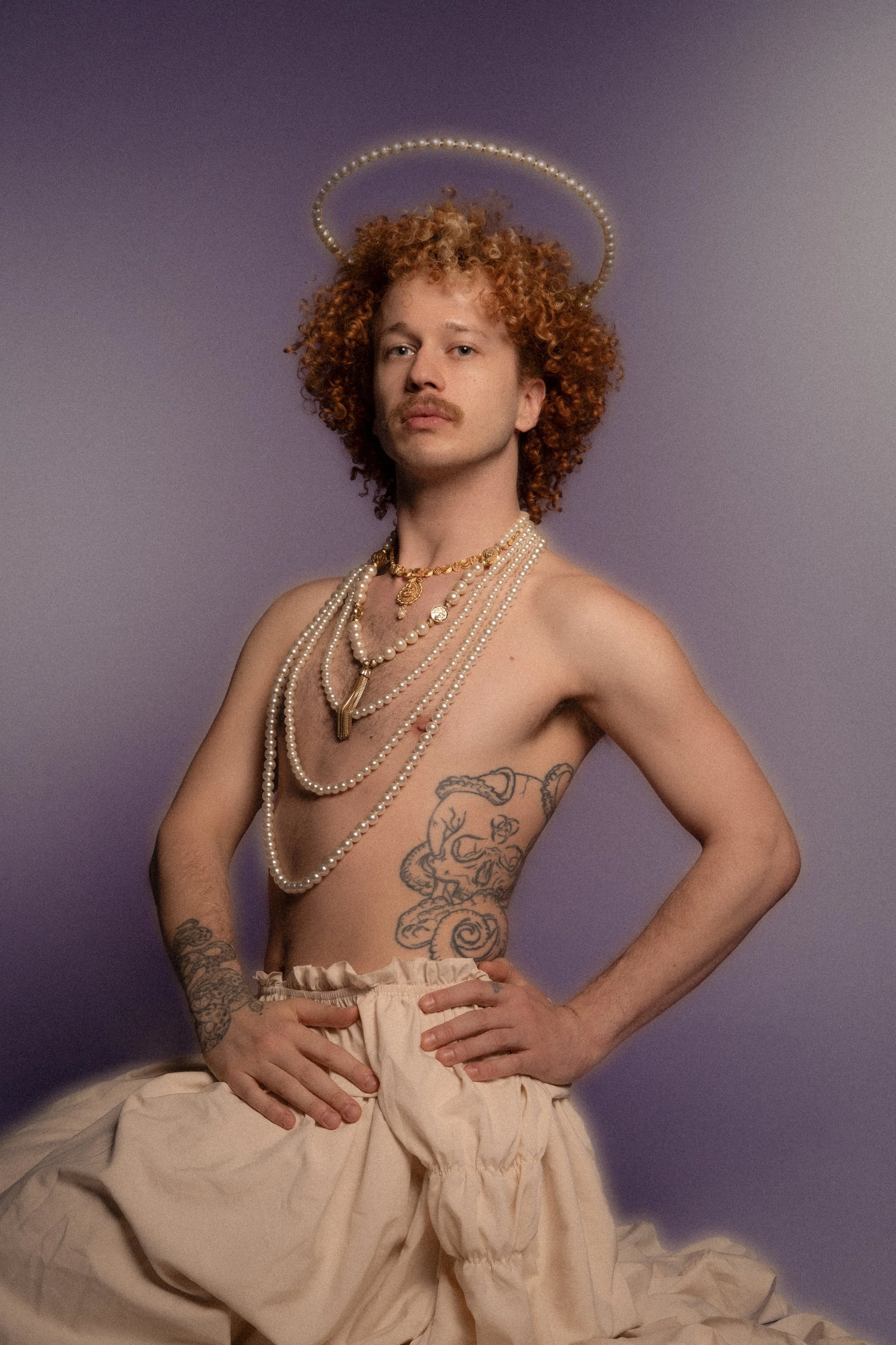
Para Thomy, a moda não é algo reservado para o palco, para o estúdio ou para as páginas de um editorial. Pertence ao movimento. Pertence ao submundo, entre plataformas de comboio e corredores de azulejos, no ritmo comum de uma cidade que nem sempre soube o que fazer com pessoas que se recusam a desaparecer.
[ PT ]Em Lisboa, o Thomy transformou o metro em algo mais do que transporte público. Através de looks completos, de uma presença marcante e de um instinto para a teatralidade, ele transforma o movimento do dia a dia em performance. Mas o que torna este trabalho fascinante não é apenas a roupa. É a insistência por trás dela. A recusa em tratar a visibilidade como um acontecimento isolado. Para o Thomy, aparecer desta forma não é uma mudança de visual antes de entrar no mundo. É o próprio mundo.Crescer num ambiente católico conservador em Portugal trouxe consequências à autoexpressão. Até algo tão pequeno como umas calças coloridas ou uma camisa mais justa podia tornar-se motivo de exclusão. Mas, em vez de se encolher, o Thomy aprendeu a questionar as regras ao seu redor. Porque é que não podia vestir o que queria? Porque é que o desejo era policiado? Porque é que a diferença era tratada como algo vergonhoso?“Eu diria que era a única opção que tinha”, diz. “Era a única verdade que queria viver.”Essa verdade move-se agora com força através do seu trabalho. Os seus vídeos podem começar com moda, mas rapidamente se transformam em algo maior: uma declaração de presença para quem ainda está a aprender a ocupar espaço. O Thomy compreende o que significa crescer sem referências queer, sem ninguém visível o suficiente para dizer, direta ou indiretamente, que outra vida é possível. “Cresci a pensar, literalmente, que era a única pessoa assim no mundo”, recorda. Essa solidão ainda molda a ternura daquilo que cria.Quando as pessoas queer o veem a caminhar por Lisboa em plena expressão, a mensagem não é abstrata. É imediata: nós existimos e estamos aqui.Há também algo de profundamente intencional na sua ligação à cidade. Lisboa não é apenas um cenário. É a sua casa, mesmo quando nem sempre lhe retribuiu o amor. “Não me quero ir embora até que isto esteja arrumado e decorado exatamente como eu quero”, diz. A frase é descontraída, mas esconde uma missão criativa séria. O Thomy não está a fugir de Portugal para encontrar a liberdade noutro lugar. Ele está a ajudar a construir uma versão de Portugal onde a liberdade possa ficar.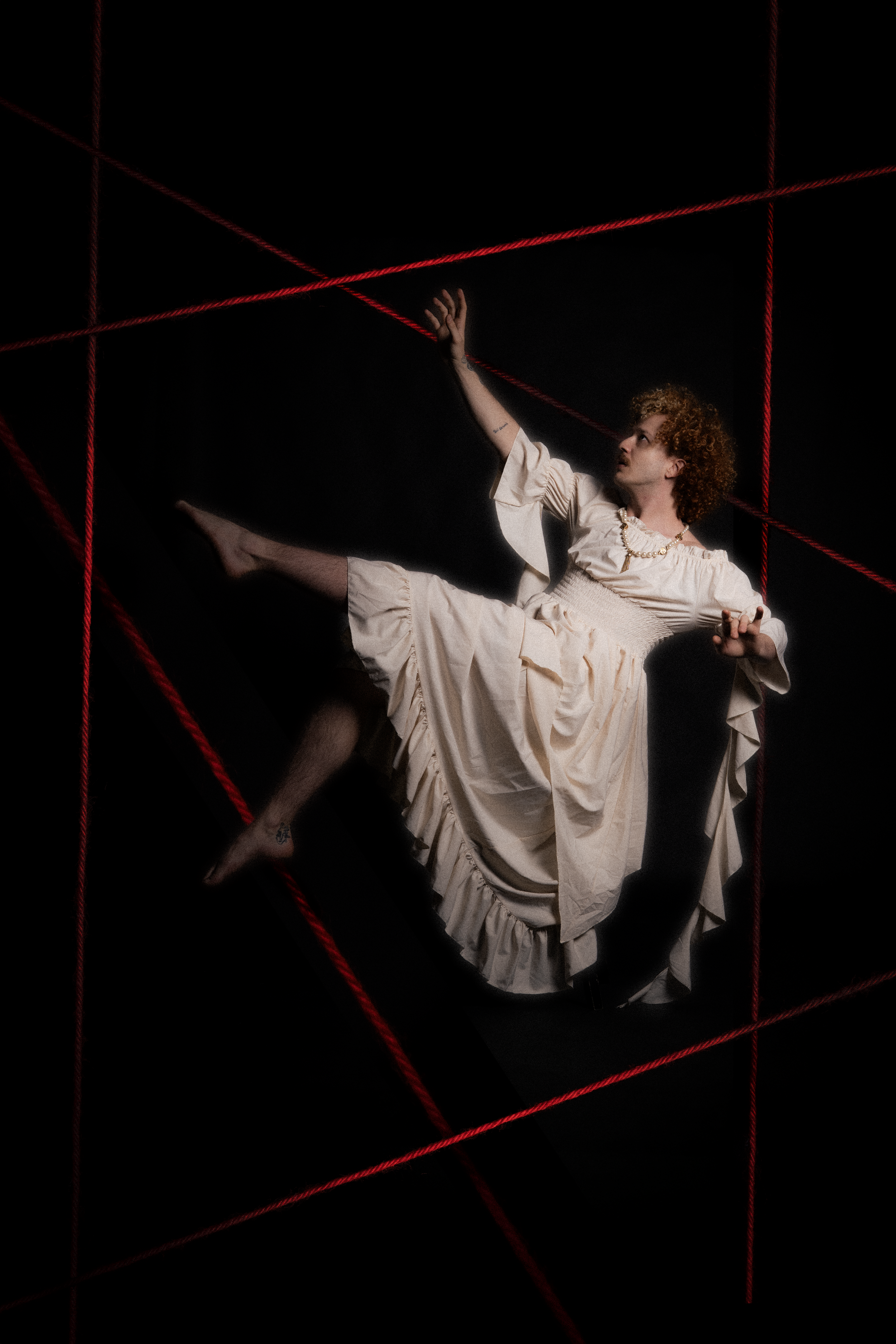

A sua relação com a moda começou, em muitos aspetos, por necessidade. Num mundo que oferecia poucas permissões, ele teve de inventar. Lembra-se de cortar t-shirts e polos no seu quarto, moldando o tecido ao corpo, prendendo peças com alfinetes para criar saias e vestidos. O que começou como uma experimentação privada tornou-se uma linguagem para a vida inteira. “Costumo dizer que não seria quem sou se não existissem tecidos e alfinetes”, afirma.Esse instinto continua a ser central na sua estética. Peças em segunda mão ganham dignidade editorial. Roupas encontradas transformam-se em fantasia. O comum fica carregado de possibilidades. O Thomy não se veste apenas a partir de si próprio; veste-se a partir daquilo que observa. As pessoas que passam pelo metro, o ritmo dos corredores, o movimento comprimido de uma cidade em trânsito. Para ele, a passerelle não foi algo que impôs ao metro. Já lá estava. Ele simplesmente decidiu começar a filmar.A sua formação em representação e design apura essa linguagem visual. Cada look começa não apenas com as roupas, mas com uma persona. Um estado de espírito. Uma personagem retirada de uma parte de si mesmo. “E ser ator é exatamente isso: vestir várias camadas humanas”, diz. No mundo do Thomy, a moda torna-se uma sobreposição literal do próprio ser: emocional, teatral, protetora, exposta.“Sempre existimos, só nem sempre nos deixaram ser vistos.”
Essa tensão entre a armadura e a vulnerabilidade está no coração do seu trabalho. Vestir-se protege a sua energia, mas também o torna mais visível. Protege-o ao revelá-lo. “É quase como proteger-me através da vulnerabilidade”, diz. É isto que dá força à sua presença. Não é uma visibilidade vazia, transformada em espetáculo. É uma visibilidade com memória por trás.Para o Thomy, a excelência queer não tem a ver com perfeição ou atenção individual. Tem a ver com existir sem pedir desculpa. É transformar o que antes estava escondido em algo digno de celebração. É caminhar por Lisboa exatamente como é, amar livremente, criar livremente e fazer com que outra pessoa se sinta “segura, bonita e possível”.Esta frase talvez seja a articulação mais clara daquilo que o seu trabalho faz. Não desafia apenas a masculinidade rígida nem se limita a expandir a linguagem da moda, embora faça as duas coisas. Cria permissão. Não de forma suave. Não de forma passiva. Mas através da ocupação ativa do espaço público.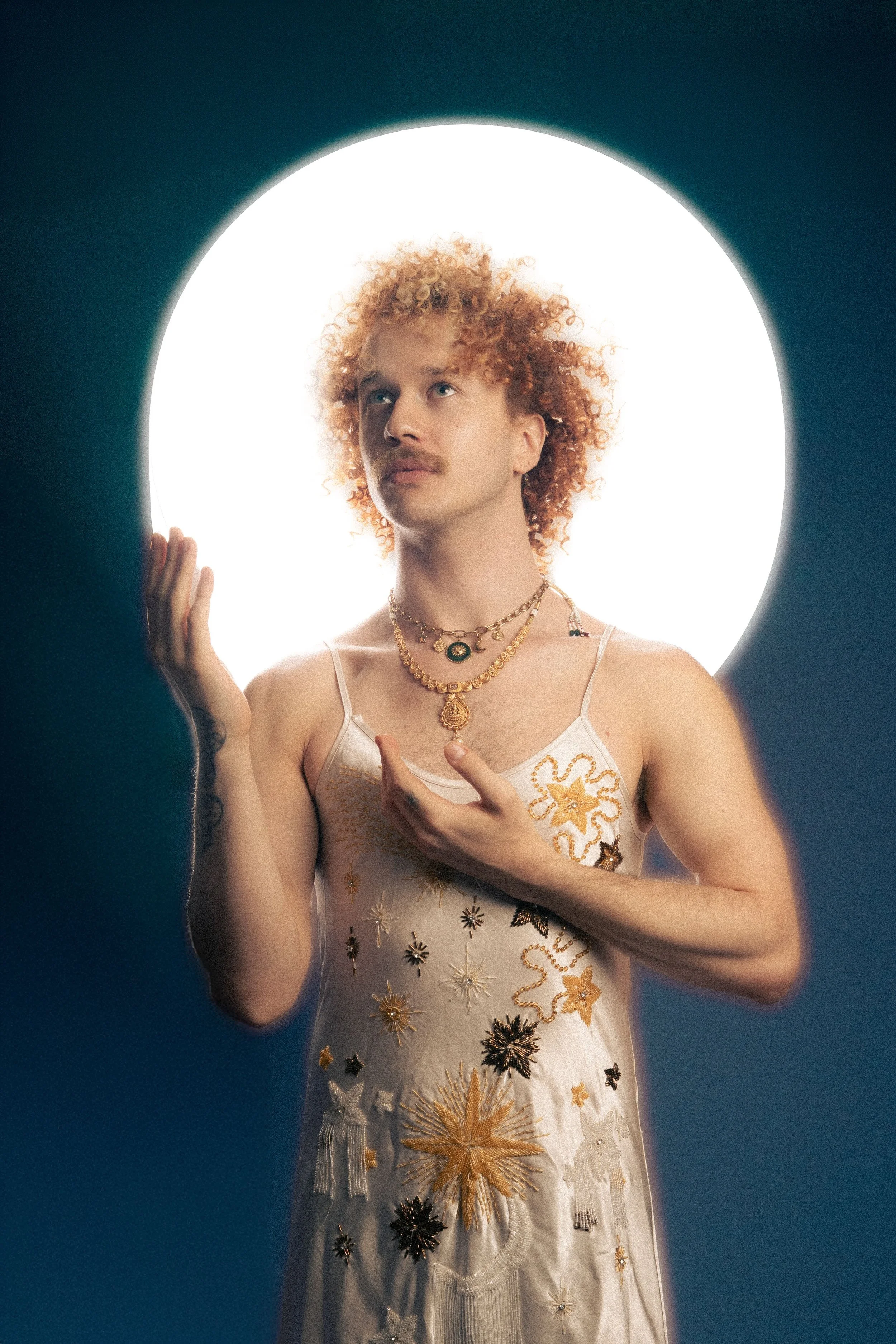
O Portugal queer que o Thomy está a ajudar a moldar não é novo porque as pessoas queer sejam uma novidade ou uma tendência recente. É novo porque mais pessoas se recusam a ficar em silêncio. “Sempre existimos”, diz ele. “Só nem sempre nos deixaram ser vistos.”E nas imagens que cria para a ICONIQA, essa visibilidade torna-se emocional. Quase infantil na sua liberdade. O tipo de liberdade que se lembra de como era imaginar o mundo antes do mundo nos ensinar as limitações. O Thomy quer que as pessoas sintam a beleza, mas também a humanidade. Que vejam o sonhador por trás da imagem. O artista apaixonado pelas pessoas, pelo movimento, pelo tecido e pela possibilidade. Acima de tudo, espera que alguém olhe para o seu trabalho e pense: “Eu também posso existir assim.”
Credits
Story: Levi Rodriguez @itslikethejeans and Miguel Silva @migueelvsilvaHuman and Styling: Tomás de Almeida @diasdechuvasecaPhoto: David Afonso @davidabaSpecial Thanks to Leonor Patrocínio @leonorpatrocinio