
Amber Vineyard: Becoming as Legacy
Human: Amber Vineyard | Story: Levi Rodriguez | Amsterdam, Netherlands
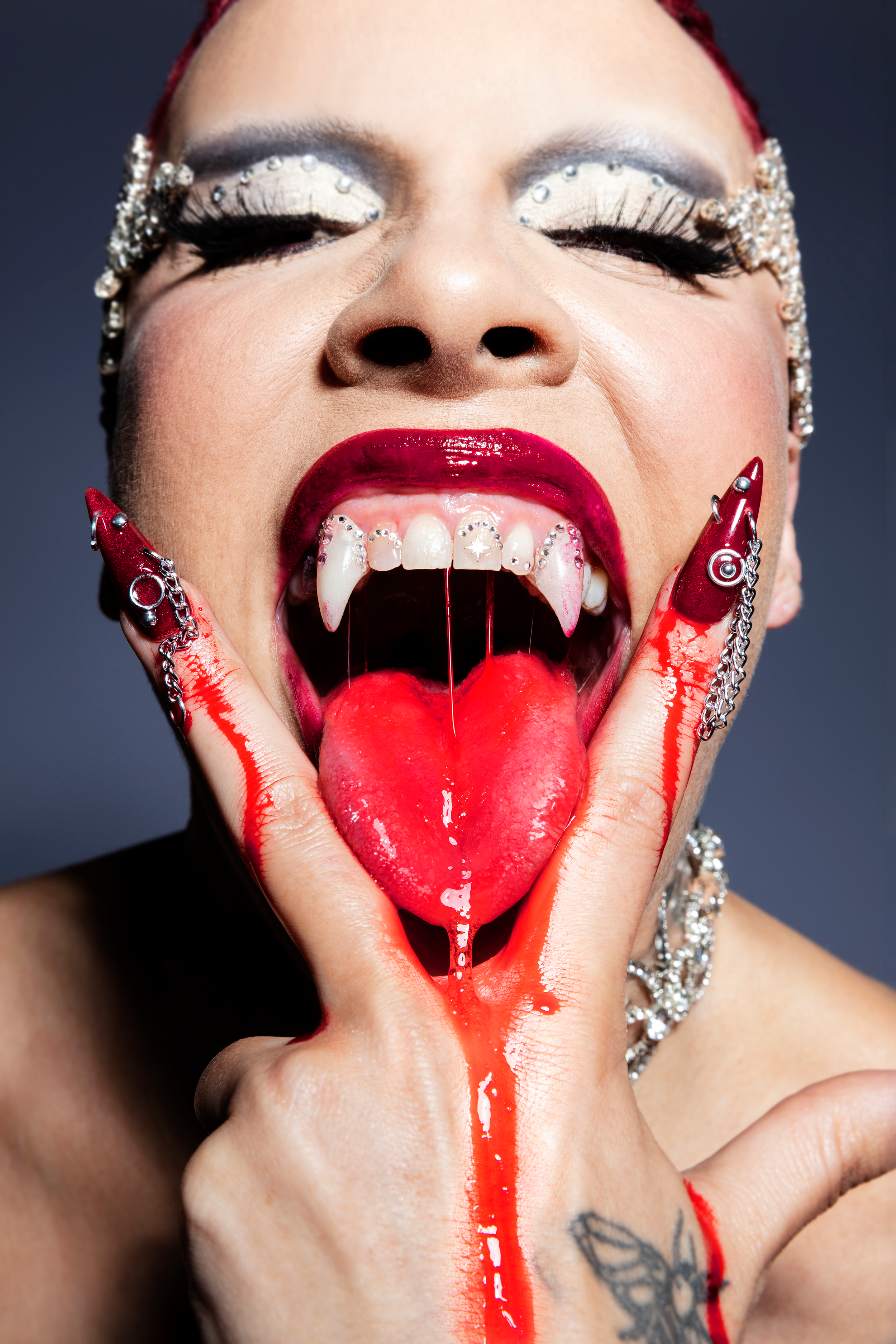
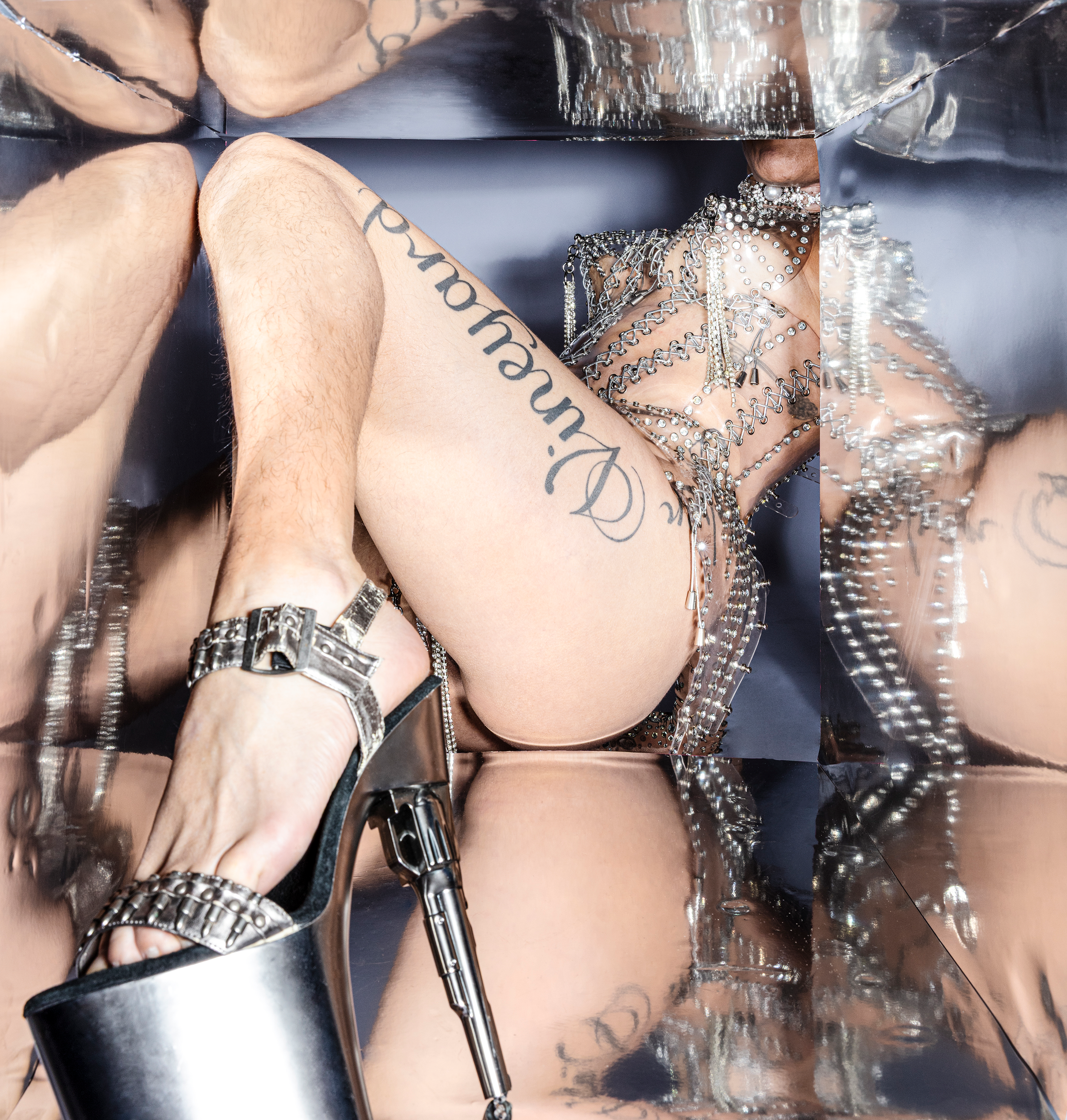
[ EN ]Amber Vineyard understands performance as more than spectacle. For them, cabaret, activism, and the stage are all rehearsals for different ways of being — temporary worlds where the rules of the mainstream can be suspended, questioned, and rewritten. But they are also clear-eyed about the tensions inside those spaces. Cabaret can resist power, but it can also become a service to the audience, a polished fantasy that offers a “Disney version of queerness” without demanding anything in return. Their work lives inside that contradiction, constantly asking what performance can hold, what it can expose, and who it ultimately serves.At the center of Vineyard’s practice is a refusal to let identity become fixed, stable, or easily consumed. They describe becoming itself as their legacy. Rather than imagining legacy as something left behind, complete and immovable, they see it as something that continues to resonate: a sound, a feeling, an ongoing conversation between who they were, who they are, and who they are still becoming. That philosophy extends directly into their stage presence. Amber Vineyard is not a character they put on and take off. The name, which many assume is a stage name, is actually their given name — tattooed on their thigh, carried as both a spell and a reminder. “Amber Vineyard is the name for the ongoing conversation between my past, present, and future selves,” they explain.That conversation has not always been simple. As a child, the stage was the one place where the parts of them that were “too much” were met with applause. Performance transformed excess into something celebrated. But over time, they began to understand the danger of becoming too fluent in pleasing an audience. The same attention that once felt liberating could become a trap, turning the performer into a servant of expectation. The real shift came through ballroom, where they encountered performance not only as expression, but as preparation for life. Ballroom taught them that what happens on the floor can rehearse what becomes possible in the world beyond it.“Give them everything without handing over the key.”
That understanding grounds their relationship to queer cabaret. Vineyard carries its lineage with an awareness of both glamour and danger. The drag queen receiving applause on stage may be the same person who could not ride the bus safely. The spectacle exists because the world outside has so often denied queer people space, safety, and recognition. Cabaret, in this sense, is not simply entertainment. It is a survival strategy, a place carved out by those who were never meant to appear at all.Visibility, for Vineyard, is equally complicated. They use it strategically — as a bridge, an encounter, a way of shifting the energy of a room. But visibility also comes with risk. The audience can begin to hold their image more tightly than they hold it themself. They are constantly asking who has control, who is looking, and what they believe they are entitled to understand. Their use of smoke, mirrors, costume, and transformation is not about hiding. It is a refusal to become digestible. “Give them everything without handing over the key,” they say.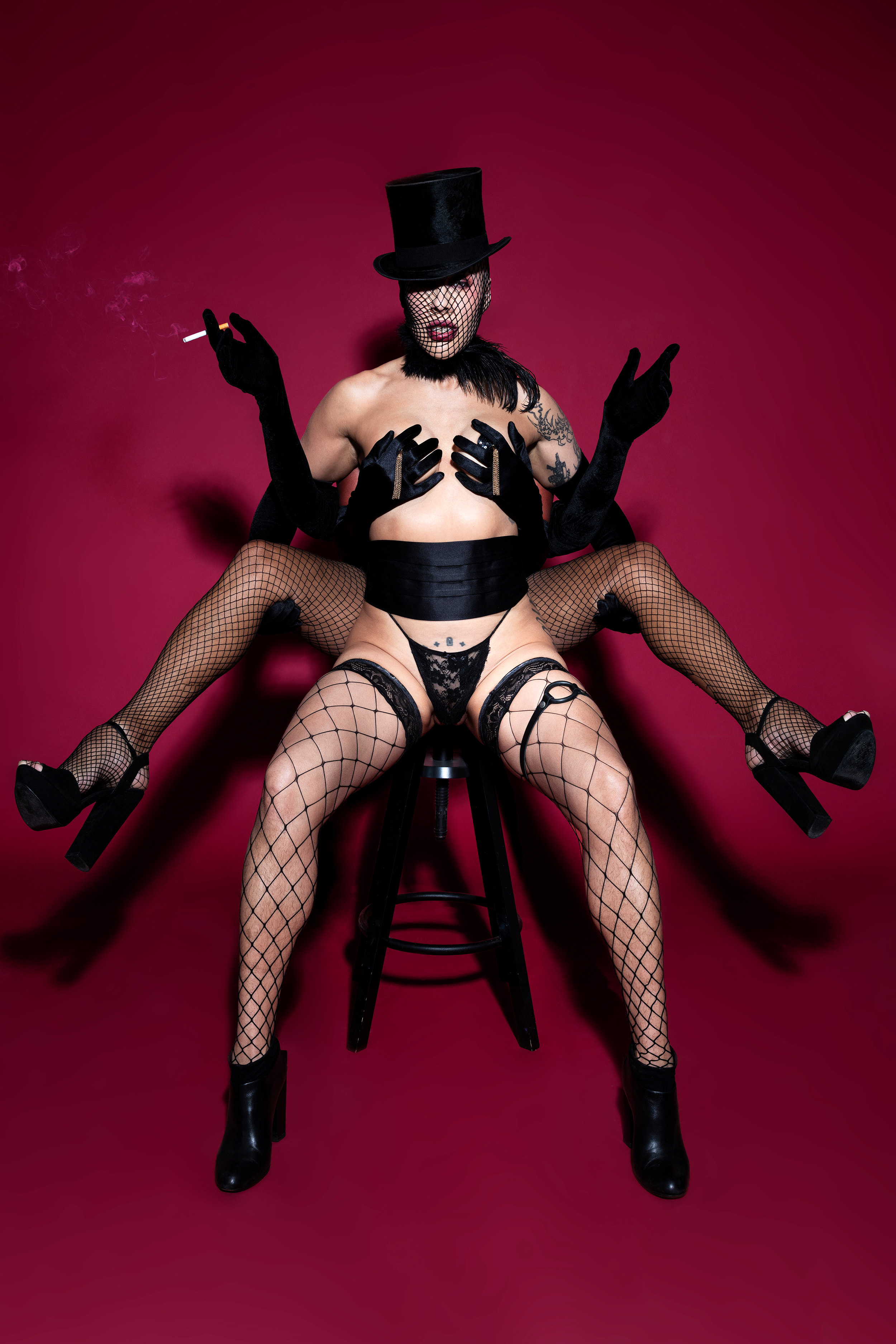
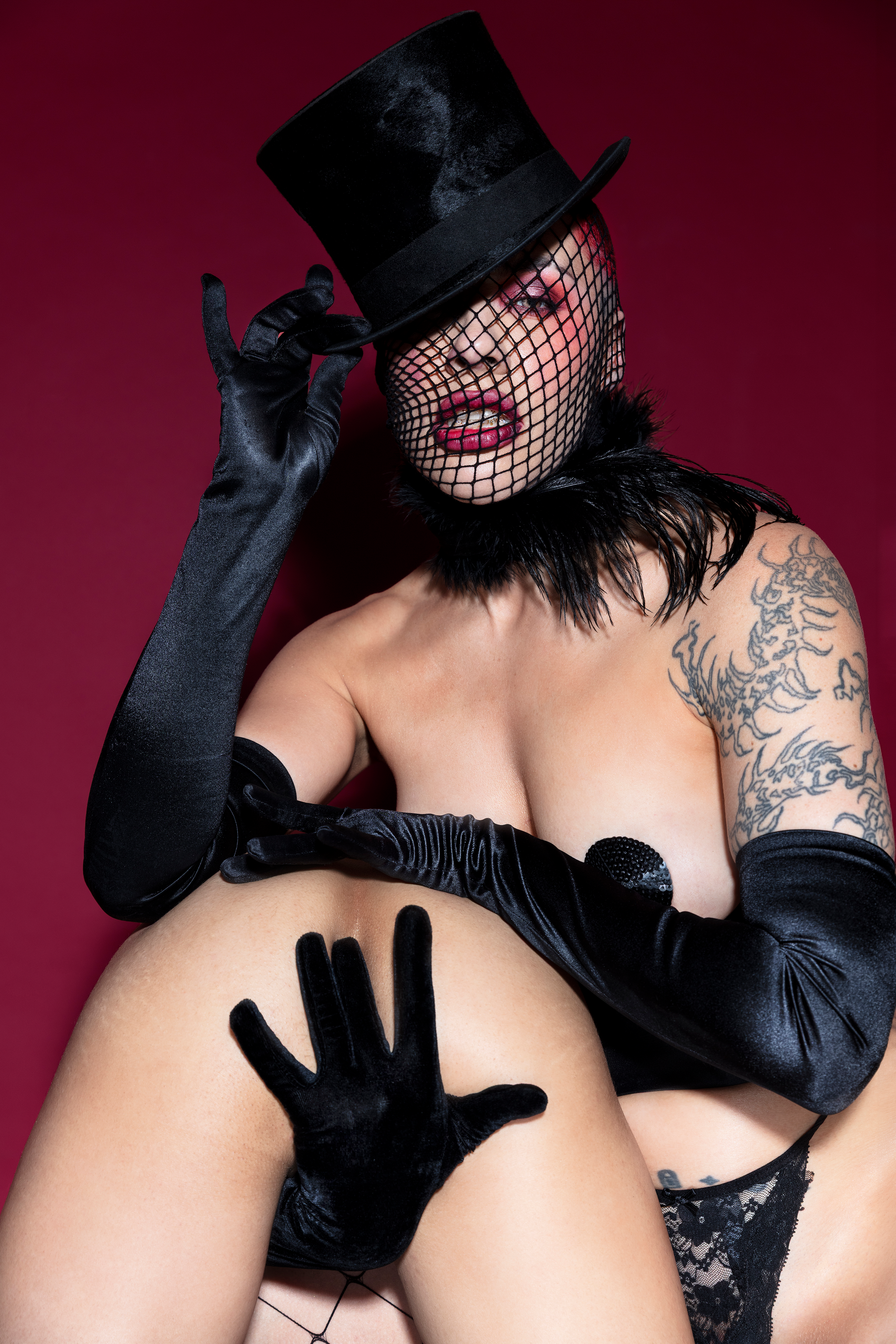
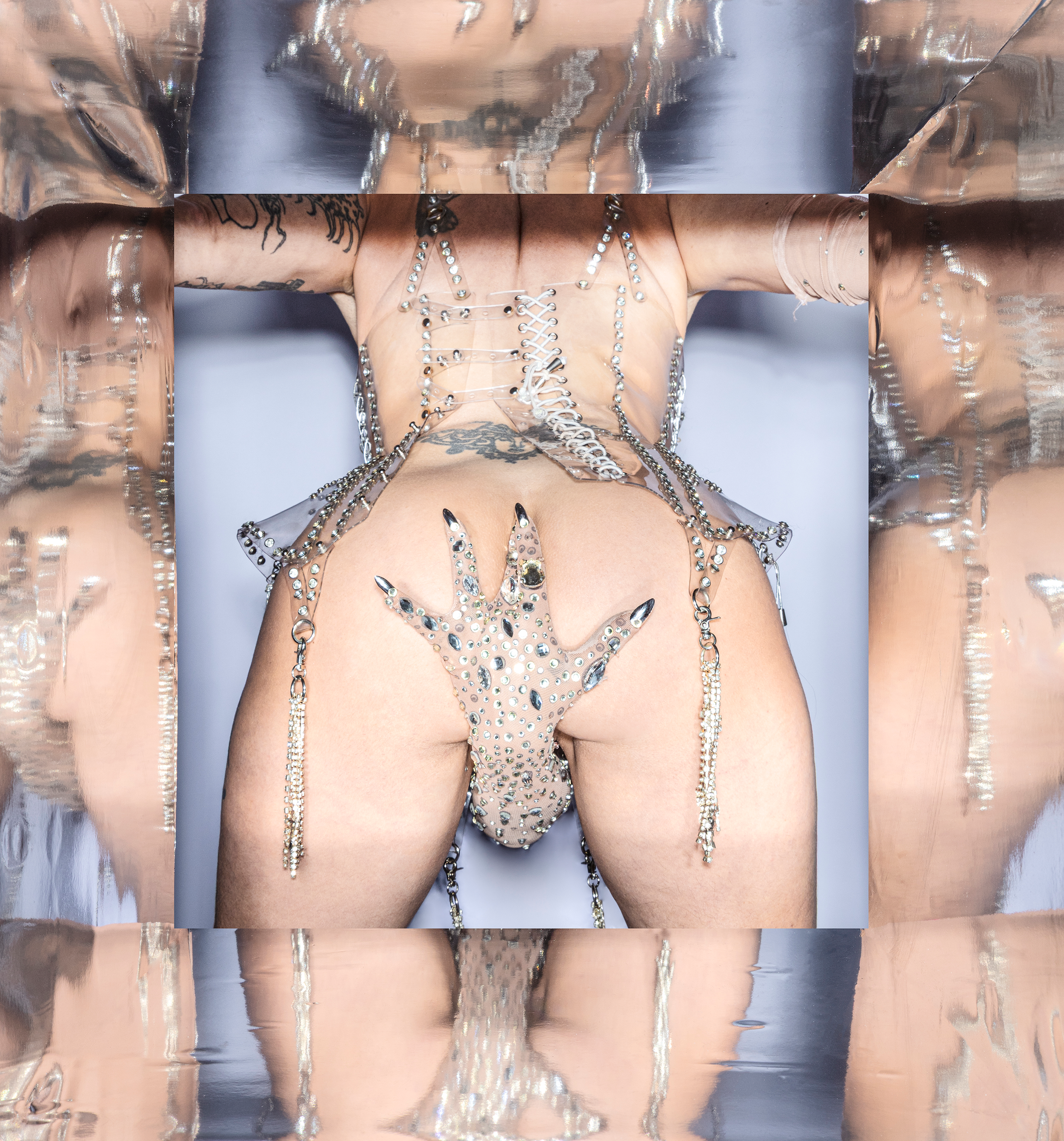
Their body functions in this work as symbol, instrument, and site of resistance. Vineyard describes wearing their body like a costume, even when nude, as though skin itself were a suit. This is part of what they call the illusion of the skin suit: the idea that the body is natural, finished, and self-evident, when in reality it has been shaped by imposed ideas about gender, beauty, and presentation. Through performance, Vineyard exposes those ideas as constructed. Normal, in their world, is not truth. It is a performance that has become so familiar it learned how to hide its own tricks.
Their show Pearl Dive pushed that excavation further. On one level, it was about making room for the full spectrum of queerness — not the simplified version often flattened into Pride imagery, but the messier, wider, more complicated range of queer existence. On another level, it was an inward dive. Vineyard had lost touch with their own desire and wanted performance to serve them again, not only the audience. The show became a double excavation: outward, toward a broader queer world; inward, toward an unfiltered self that did not require applause to feel real.That desire for honesty also shapes how they think about space and community. Vineyard resists easy claims of “safety,” especially when safety becomes a tool for control. For them, an accountable space does not promise that harm will never happen. It builds the awareness, structure, and responsibility needed to address conflict when it does. This is part of the world they want to create: not a frictionless fantasy, but a space with the tools to hold complexity.“Queer excellence is not a trophy. It’s a state of being where a person is so authentically, unapologetically themselves that they defy the norm without filtering themselves for anyone else.”
When asked what queer excellence means beyond visibility or success, Vineyard rejects the idea of a trophy. Queer excellence, to them, is a state of being so authentically and unapologetically oneself that the norm is defied without performance for approval. But they also question who gets access to that kind of freedom. Who gets to explore queerness fully? Who might emerge if queerness were allowed to shape a life from scratch?For Vineyard, excellence is not arrival. It is movement. It is the love of becoming, the courage to change form, and the willingness to let the next self arrive before the current one has hardened into myth. Looking ahead, they are moving toward stages and collaborations that do not require them to push against something in order to exist. After years of friction, they want to know what performance feels like when it begins from desire.The world Amber Vineyard builds on stage is not an escape from reality. It is reality cracked open, made stranger, deeper, and more possible. Its doors are meant to be walked through. And for those encountering their work for the first time, what they offer is not a finished answer, but a key: the possibility that the real and the performed were never opposites at all. They were always collaborators.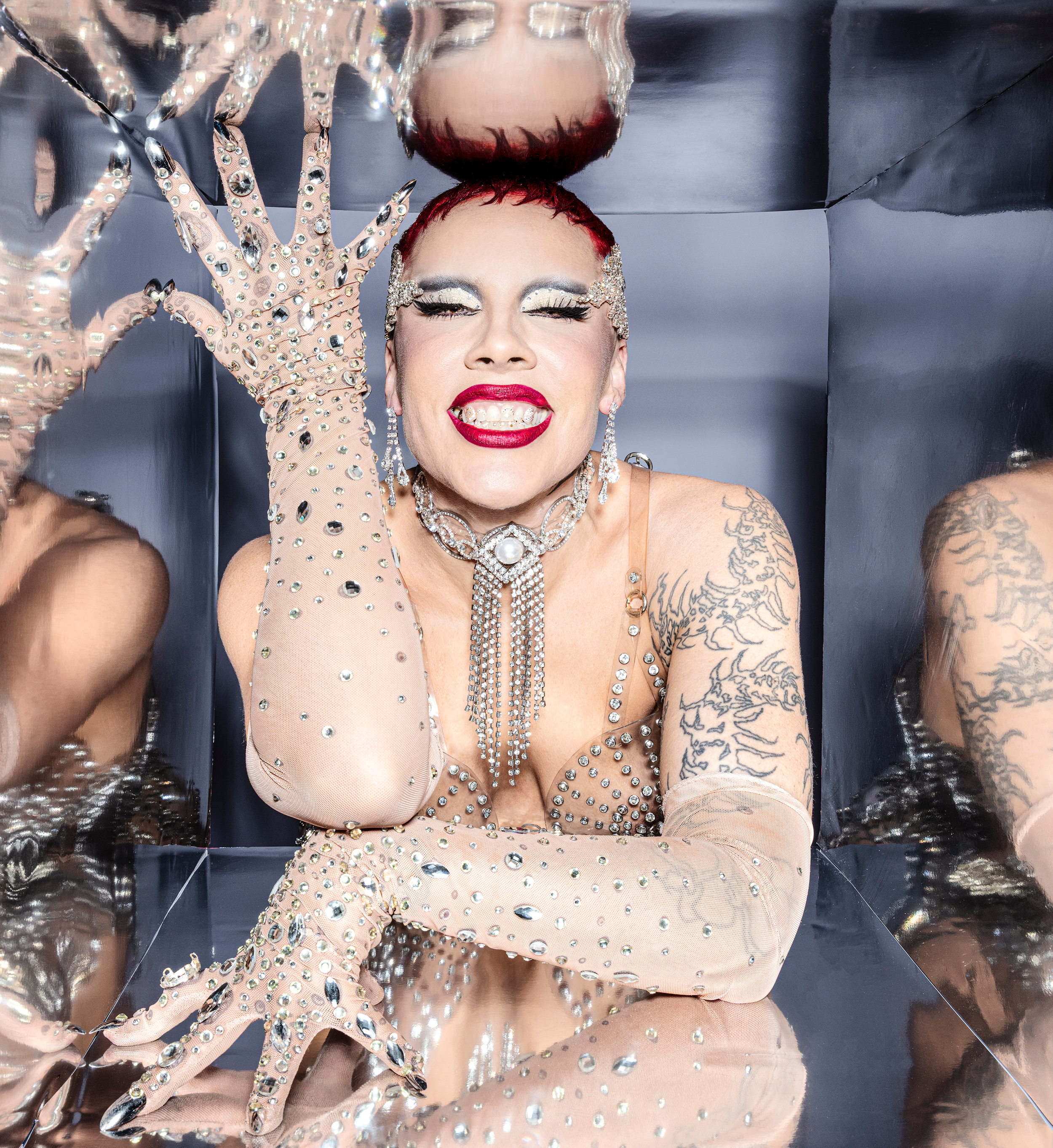
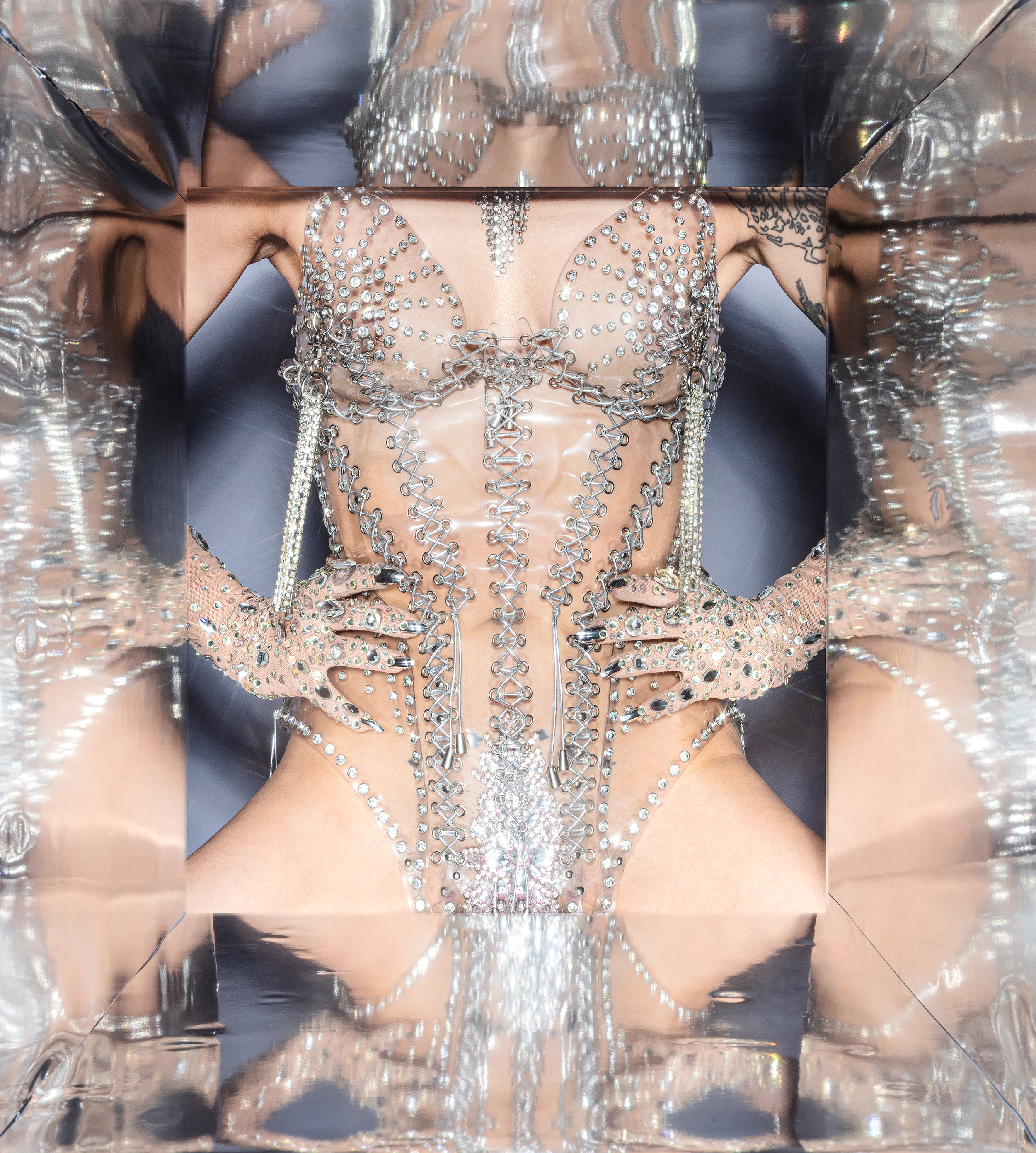
See-Through Bodysuit: Kojai Kosti @kojaikosti
[ NL ]Amber Vineyard begrijpt performance als meer dan een spektakel. Voor hen zijn cabaret, activisme en het podium allemaal vormen voor andere manieren van zijn - tijdelijke werelden waarin de regels van de heteronormativiteit kunnen worden opgeschort, bevraagd en herschreven. Maar hen zijn zich ook scherp bewust van de spanningen binnen deze ruimtes. Cabaret kan zich verzetten tegen macht, d, een gepolijste fantasie die een “Disney-versie van queerness” laat zien zonder iets terug te verwachten. Hun werk leeft precies in die tegenstelling en vraagt voortdurend af wat performance kan inhouden, wat het kan blootleggen, en wie het uiteindelijk dient.Centraal in Vineyards praktijk staat een weigering om identiteit vast, stabiel of gemakkelijk consumeerbaar te laten worden. Hen beschrijven het “worden” zelf als hun nalatenschap. In plaats van nalatenschap te zien als iets wat compleet en onveranderd wordt doorgegeven. , Hen zien het als iets dat blijft ontwikkelen;: een geluid, een gevoel, een voortdurend gesprek tussen wie ze waren, wie ze zijn, en wie ze nog worden. Die filosofie loopt rechtstreeks door in hun aanwezigheid op het podium. Amber Vineyard is geen personage. dat ze opzetten en weer afleggen. De naam, die velen als een artiestennaam beschouwen, is in werkelijkheid hun gegeven naam - getatoeëerd op hun dij, gedragen als zowel een spreuk als een herinnering. “Amber Vineyard is de naam voor het voortdurende gesprek tussen mijn eerdere, huidige en toekomstige zelf,” leggen hen uit.“Geef ze alles, zonder de sleutel te overhandigen.”
Dat gesprek is niet altijd eenvoudig geweest. Als kind was het podium de enige plek waar de delen van hen die “te veel” waren, met applaus werden ontvangen. Performance veranderde overdaad in iets dat gevierd werd. Maar Na verloop van tijd begonnen hen het gevaar te begrijpen om het publiek te geven wat zij verwachten.. Dezelfde aandacht die ooit bevrijdend voelde, kon een valstrik worden, waarbij de performer veranderd in een dienaar van verwachting. De echte verschuiving kwam via ballroom, waar hen performance niet alleen leerden kennen als expressie, maar ook als voorbereiding op het leven. Ballroom leerde hen dat wat zich op de vloer ontvouwt, een blauwdruk kan worden voor wat daarbuiten mogelijk is.Dat begrip vormt de basis van hun relatie tot queer cabaret. Vineyard draagt deze traditie met een bewustzijn van zowel glamour als gevaar. De dragqueen die op het podium applaus ontvangt, kan dezelfde persoon zijn die niet veilig met de bus naar huis kan. Het spektakel bestaat omdat de wereld daarbuiten LGBTQIA+ mensen zo vaak ruimte, veiligheid en erkenning heeft ontzegd. Cabaret is in die zin niet simpelweg entertainment. Het is een overlevingsstrategie, een plek die is gecreëerd door mensen die nooit bedoeld waren om überhaupt zichtbaar te zijn.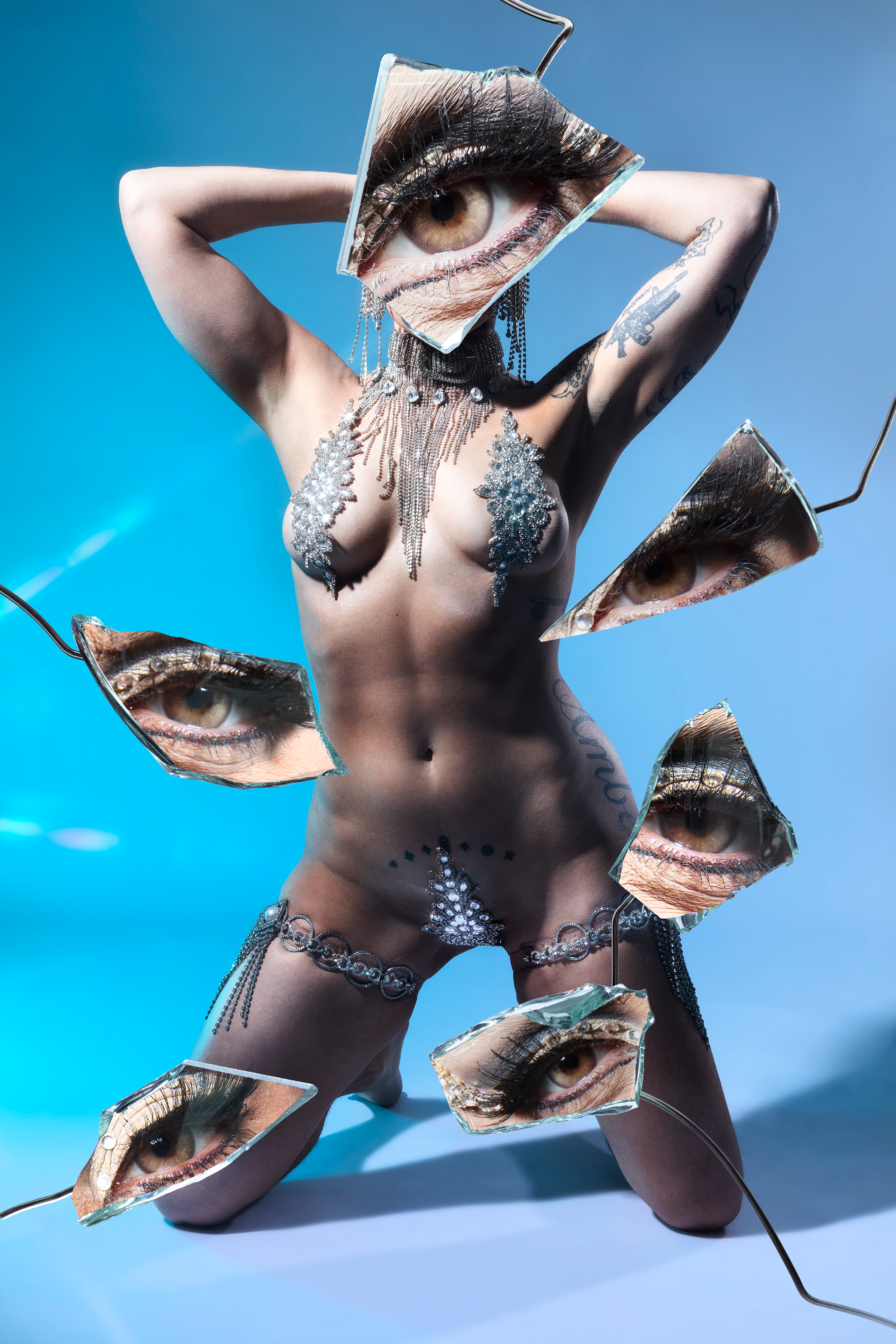
Voor Vineyard is zichtbaarheid even complex. Hen gebruiken het strategisch - als brug, als ontmoeting, als manier om de energie van een ruimte te verschuiven. Maar zichtbaarheid brengt ook risico’s met zich mee. Remove this sentance. Hen vragen zich voortdurend af wie controle heeft, wie kijkt, en wat diegene denkt te mogen begrijpen. Hun gebruik van rook, spiegels, kostuums en transformatie gaat niet over verbergen. Het is een weigering om geconsumeerd te worden. “Geef het publiek alles zonder de sleutel te overhandigen,” zeggen ze.Hun lichaam functioneert in dit werk als symbool, instrument en plek van verzet. Vineyard beschrijft hoe hen hun lichaam dragen als een kostuum, zelfs wanneer hen naakt zijn, alsof de huid zelf een pak is. Dit maakt deel uit van wat hen de illusie van het naakte lichaam noemen: het idee dat het lichaam natuurlijk, af en vanzelfsprekend is, terwijl het in werkelijkheid gevormd is door opgelegde ideeën over gender, schoonheid en presentatie. Via performance leggen hen die ideeën bloot als constructies. Normaal is in hun wereld geen waarheid. Het is een performance die zo vertrouwd is geworden dat hen hun eigen trucs heeft leren verbergen.“Queer excellence is geen trofee. Het is een staat van zijn, waarin iemand zo authentiek en onbeschaamd zichzelf is, dat diegene de norm uitdaagt zonder zichzelf te filteren.”
Hun show Pearl Dive dreef die blootstelling nog verder. Op één niveau ging het over ruimte maken voor het volledige spectrum van queerness - niet de vereenvoudigde versie die vaak wordt platgeslagen tot Pride-beelden, maar de rommeligere, bredere en complexere realiteit van queer bestaan. Op een ander niveau was het een innerlijke zoektocht. Vineyard was het contact met hun eigen verlangen kwijtgeraakt en wilde dat performance opnieuw hén zou dienen, niet alleen het publiek. De show kreeg een dubbele betekenis: naar buiten toe, richting een bredere queer wereld; naar binnen toe, richting een ongefilterd zelf dat geen applaus nodig had om echt te voelen.Dat verlangen naar eerlijkheid bepaalt ook hoe hen denken over ruimte en gemeenschap. Vineyard verzet zich tegen makkelijke claims van “veiligheid”, vooral wanneer veiligheid een middel tot controle wordt. Voor hen belooft een verantwoordelijke ruimte niet dat schade nooit zal plaatsvinden. Hen bouwen het bewustzijn, de structuur en de verantwoordelijkheid die nodig zijn om conflict aan te pakken wanneer het zich voordoet. Dit maakt deel uit van de wereld die hen willen creëren: geen wrijvingsloze fantasie, maar een ruimte met de middelen om complexiteit te dragen.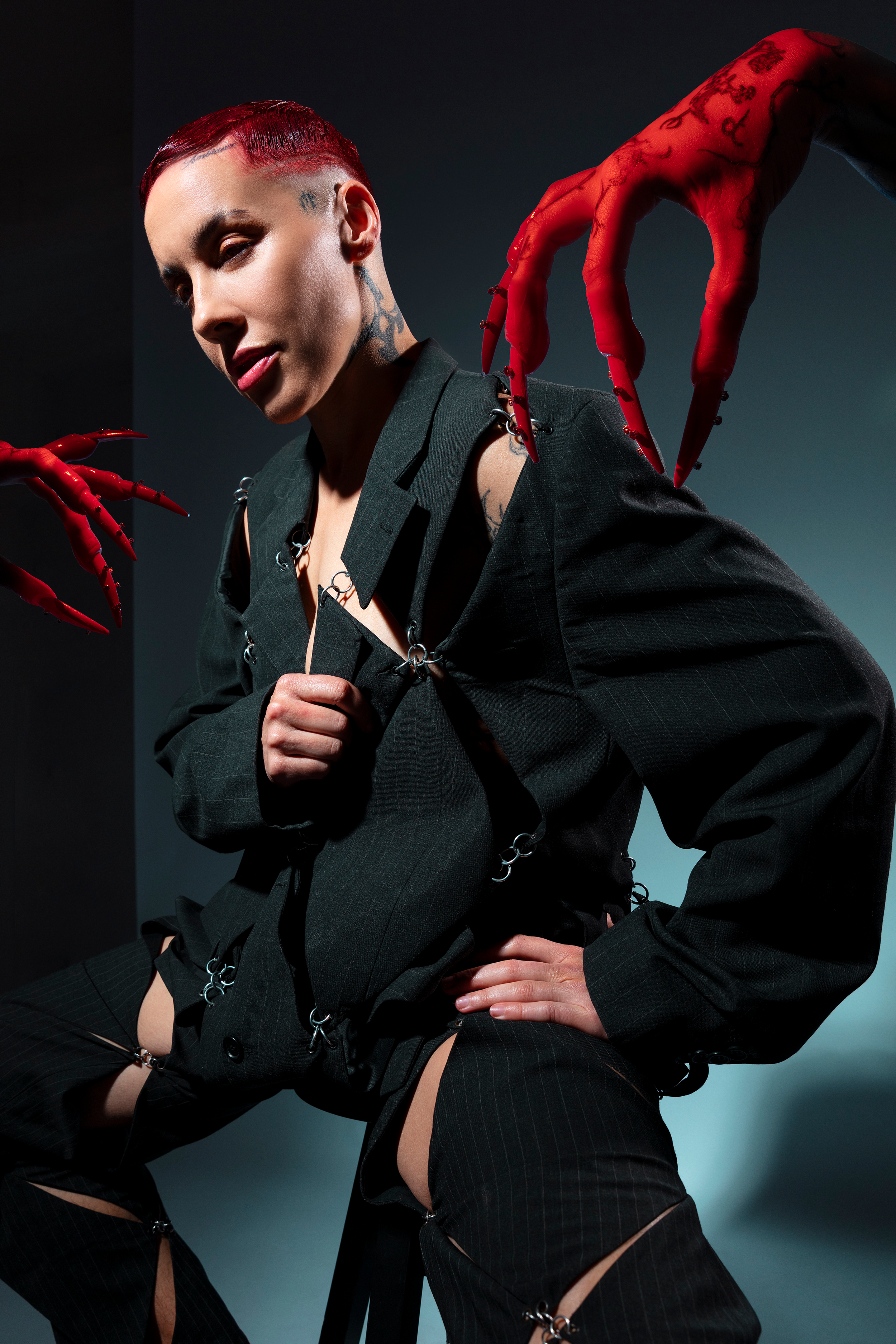
Deconstructed Suit: Vita & Tijme @vitatijme
Wanneer wordt gevraagd wat queer excellence betekent voorbij zichtbaarheid of succes, verwerpt Vineyard het idee van een trofee. Voor hen is queer excellence een staat van zijn waarin iemand zo authentiek en ongegeneerd zichzelf is dat de norm wordt uitgedaagd zonder te performen voor goedkeuring. Maar hen stellen ook de vraag wie toegang krijgt tot die vorm van vrijheid. Wie krijgt de ruimte om queerness volledig te verkennen? Wie zou kunnen ontstaan als queerness vanaf het begin een leven mocht vormgeven?Voor Vineyard is excellence geen aankomst. Het is beweging. Het is de liefde voor het worden, de moed om van vorm te veranderen en de bereidheid om het nieuwe zelfbeeld te laten verschijnen voordat het huidige is verhard tot mythe. Vooruitkijkend bewegen hen zich richting podia en samenwerkingen die niet vereisen dat hen ergens tegenaan moeten duwen om te mogen bestaan. Na jaren van frictie willen jhen weten hoe performance voelt wanneer die begint vanuit verlangen.
De wereld die Amber Vineyard op het podium bouwt, is geen ontsnapping aan de werkelijkheid. Het is opengebroken, vreemder, dieper en voller.. De deuren ervan zijn bedoeld om doorheen te lopen. En voor wie hun werk voor het eerst tegenkomt, bieden ze geen afgerond antwoord, maar een startpunt: een mogelijkheid dat het echte en het performatieve nooit elkaars tegenpolen waren. Ze waren altijd al gelijk aan elkaar.Credits
Photo and Concept: Studio Rik Versteeg @studiorikversteegHuman: Amber Vineyard @ambervineyardStory: Levi Rodriguez @itslikethejeansMakeup & Hair: Afif Shafit @lickbylickaPhoto Assistant: Luca van Ruiten @lucavanruiten_photography, Roxstar Vineyard @roxettecaprilesNails: Elejandro Martinez @thenailboySee Through Bodysuit: Kojai Kosti @kojaikostiBody Double and Hand Model: Monika Vineyard @monikajoakimDutch translation: Rik Versteeg @studiorikversteeg