
An Outsider by Design
Human: Violet Chachki | Atlanta, the states
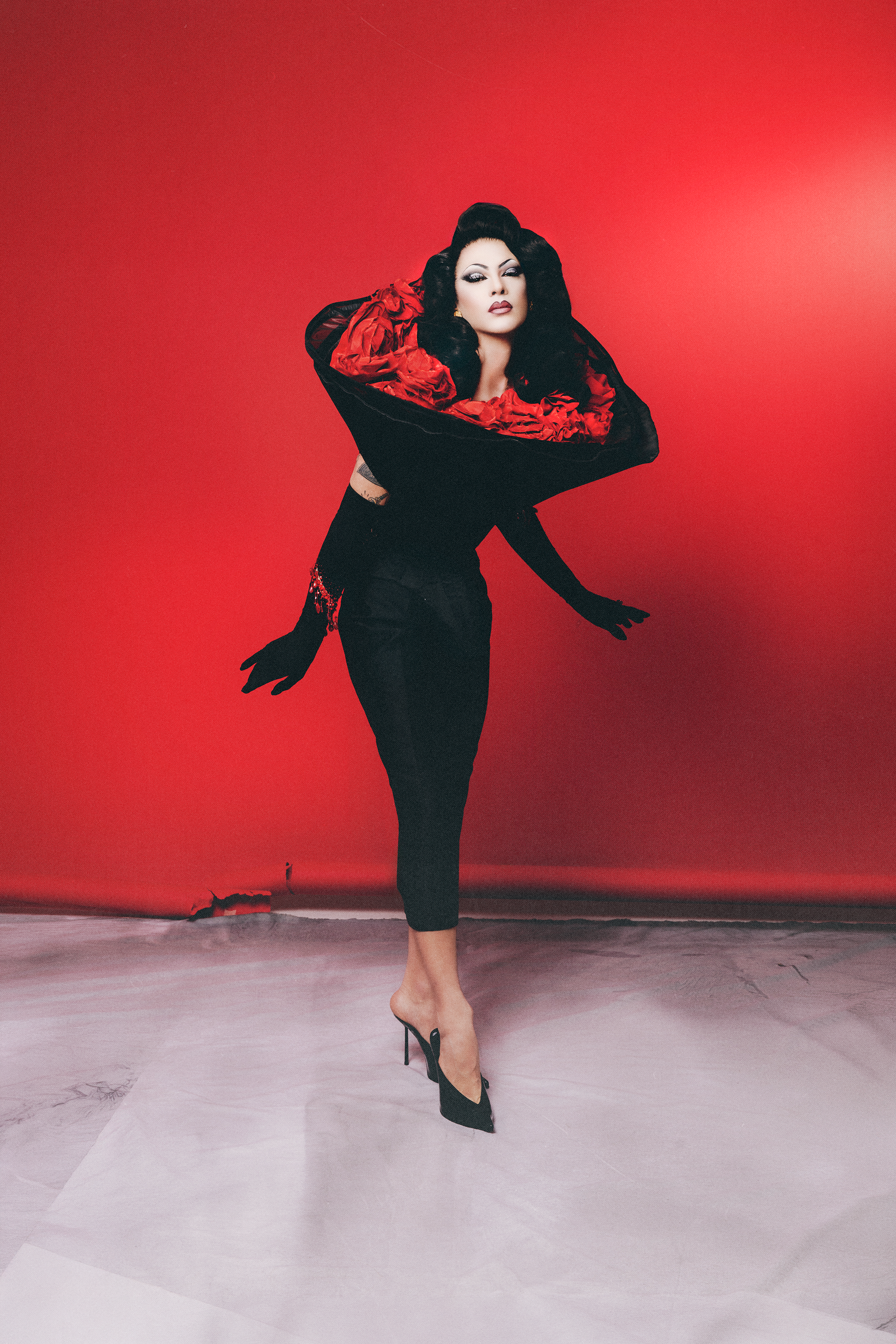
Before the waist was cinched into something mythic, before the silhouette became instantly recognizable, there was a uniform: gray slacks, unforgiving pleats, a prescribed version of boyhood.
remembers it not as clothing, but as unwelcome instruction on how to behave, how to exist, how to disappear into something compliant. Catholic school offered a system of order, one that made clear distinctions between what was permitted and what was not. Boys wore one thing. Girls wore another. Fabric itself seemed gendered, divided with a logic that felt both arbitrary and absolute. “That always bothered me… the difference. Why is that for them and this for me?” The questioning came early. Not loudly at first, but persistently. A friction that built each time she was asked to conform to something that didn’t feel true.The first rebellion was small, almost imperceptible. A shift in construction. A refusal to accept the garment or the norm as given. She took the pleated pants and altered them into flat-front trousers. Subtle, but intentional. Then came the details that couldn’t be ignored: longer hair, a nose piercing, the slow accumulation of choices that marked her as visibly different. And then, more deliberate still, the stitch that made it undeniable. “I remember using neon green thread on my gray uniform… just to distinguish myself.” It wasn’t just aesthetic. It was signal. A message to herself as much as to anyone watching: I do not belong here. Or perhaps more precisely, I refuse to belong here on your terms.
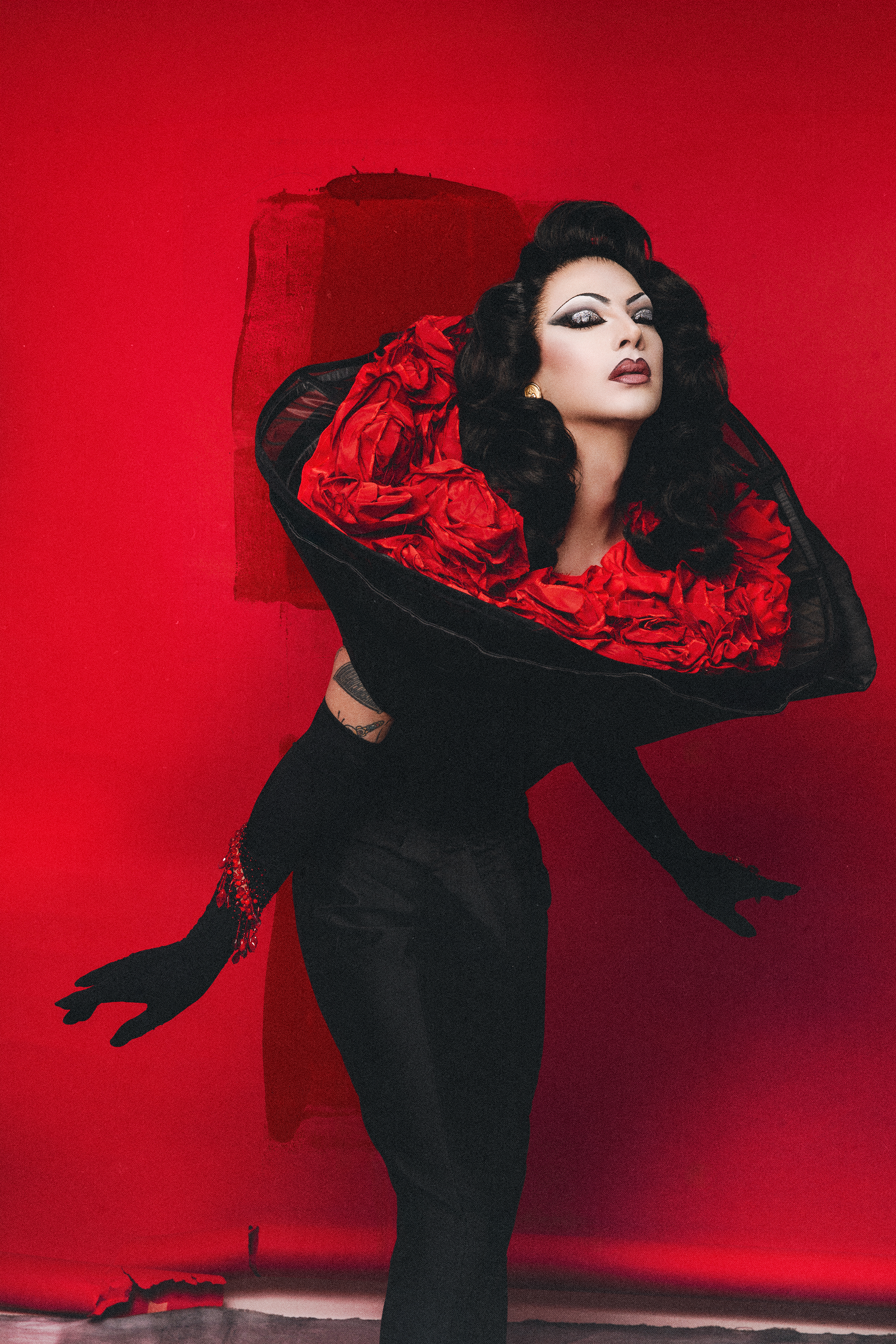
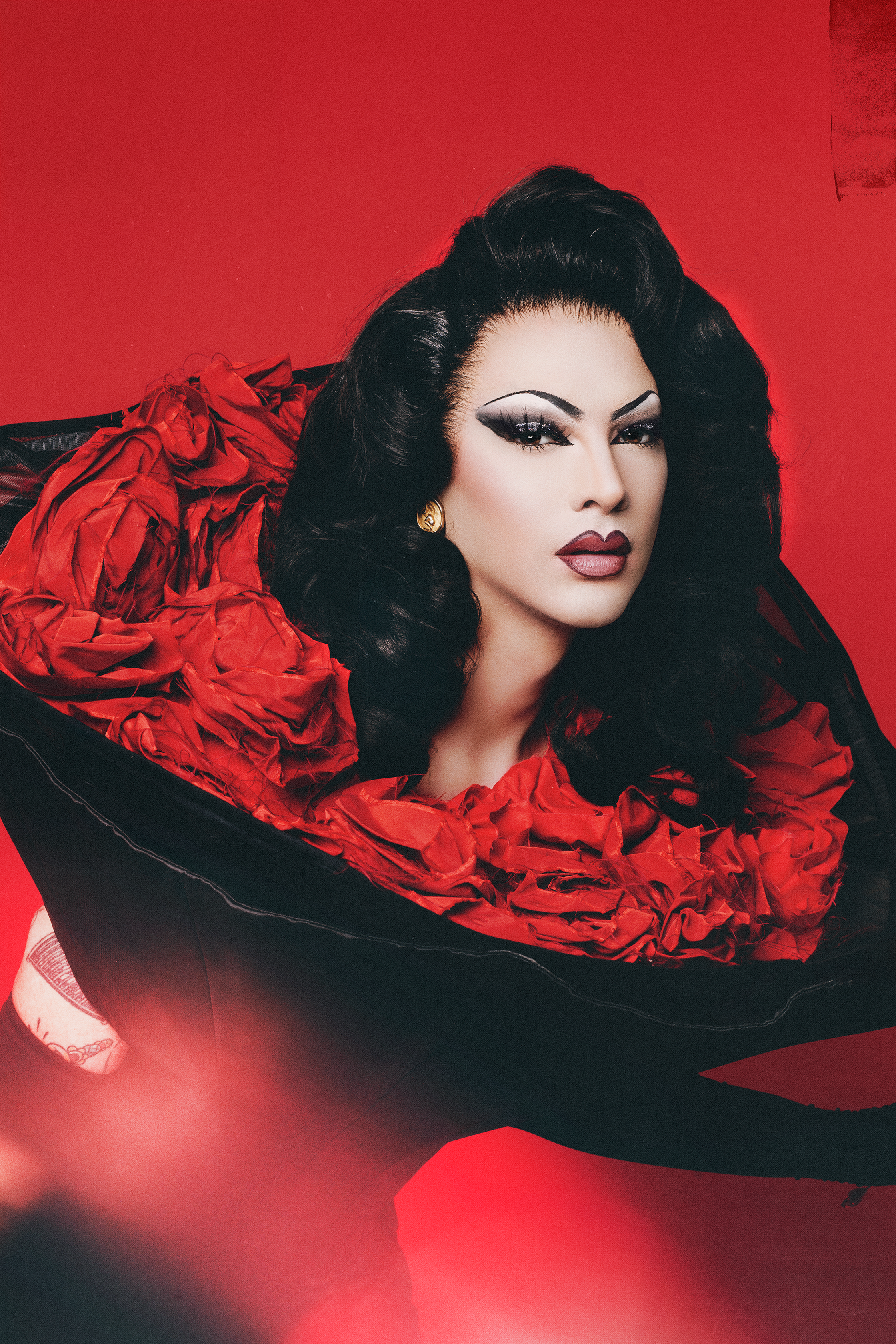
Dress: Curro Martinez @curromtnez | Heels: Le Silla @lesilla | Gloves: C’est Jeanne @cest_jeanne | Earrings: Givenchy @givenchy
Fashion, even then, was language. A way to articulate what couldn’t yet be fully spoken. A way to create distance from a system that demanded sameness. She needed “something to remind myself that there was a life outside of that environment,” she reflects. That instinct, to use clothing as both declaration and escape route, would become central to how Violet understood queerness itself: not as something to soften for public consumption, but as something meant to occupy the room. “Queerness… is about taking up as much space as possible in as many mainstream places as possible,” she says. For Violet, visibility was never passive. It was active, deliberate, and charged with the punk connotation the word has always carried."That always bothered me… the difference. Why is that for them and this for me?"
That outside world began to take shape not in proximity, but online. In the early days of MySpace and Tumblr, counterculture wasn’t filtered or branded. It was lived and shared in raw, real, unedited fragments: a photo, a look, a body presented without a performative bone to it. For Violet, it was a revelation. “It was a crucial time,” she recalls. “Seeing other people… who were living like that, who were into fashion, music, queer culture.” Candy Darling. The Club Kids. Figures whose realness existed outside the confines of normalcy, who made spectacle out of difference and transformed it into power. When Violet found them “it made being an outsider aspirational.” Something to move toward. Something to become.When drag entered her life, it took everything she had been building internally and made it undeniable. She stepped into spaces that had no expectation of her and rewrote the terms of her presence.“I would go to places like Starbucks… or tourist attractions… in full drag,” she says. “Just to expose people.” It was, in her words, “shock art.” Not for provocation alone, but for disruption. An insistence that queerness, in all its complexity, could not be contained to the margins. For Violet, queerness has always carried that charge: “taking up as much space as possible… especially in mainstream places.” It has, as she puts it, “a punkness to it.”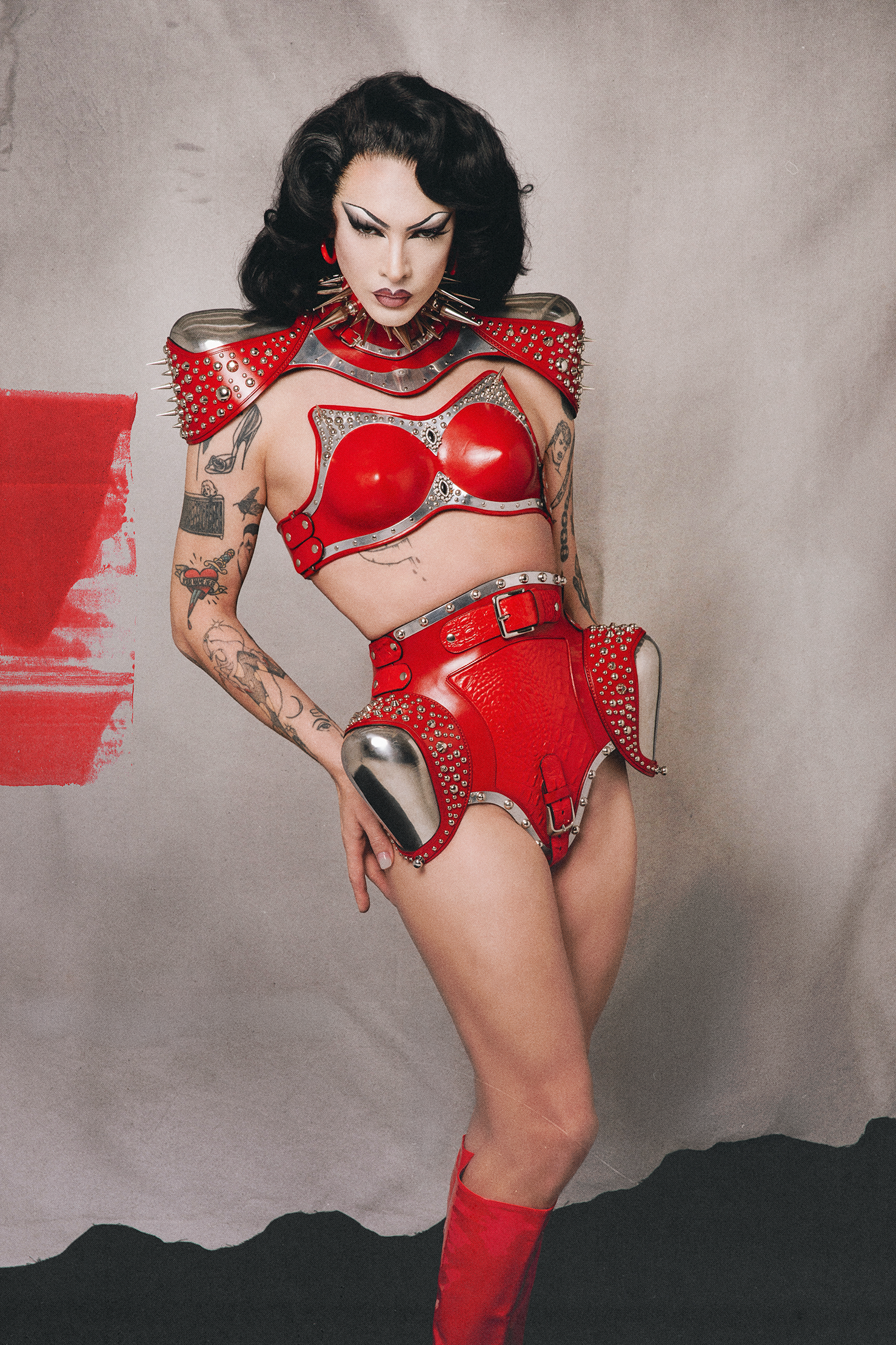
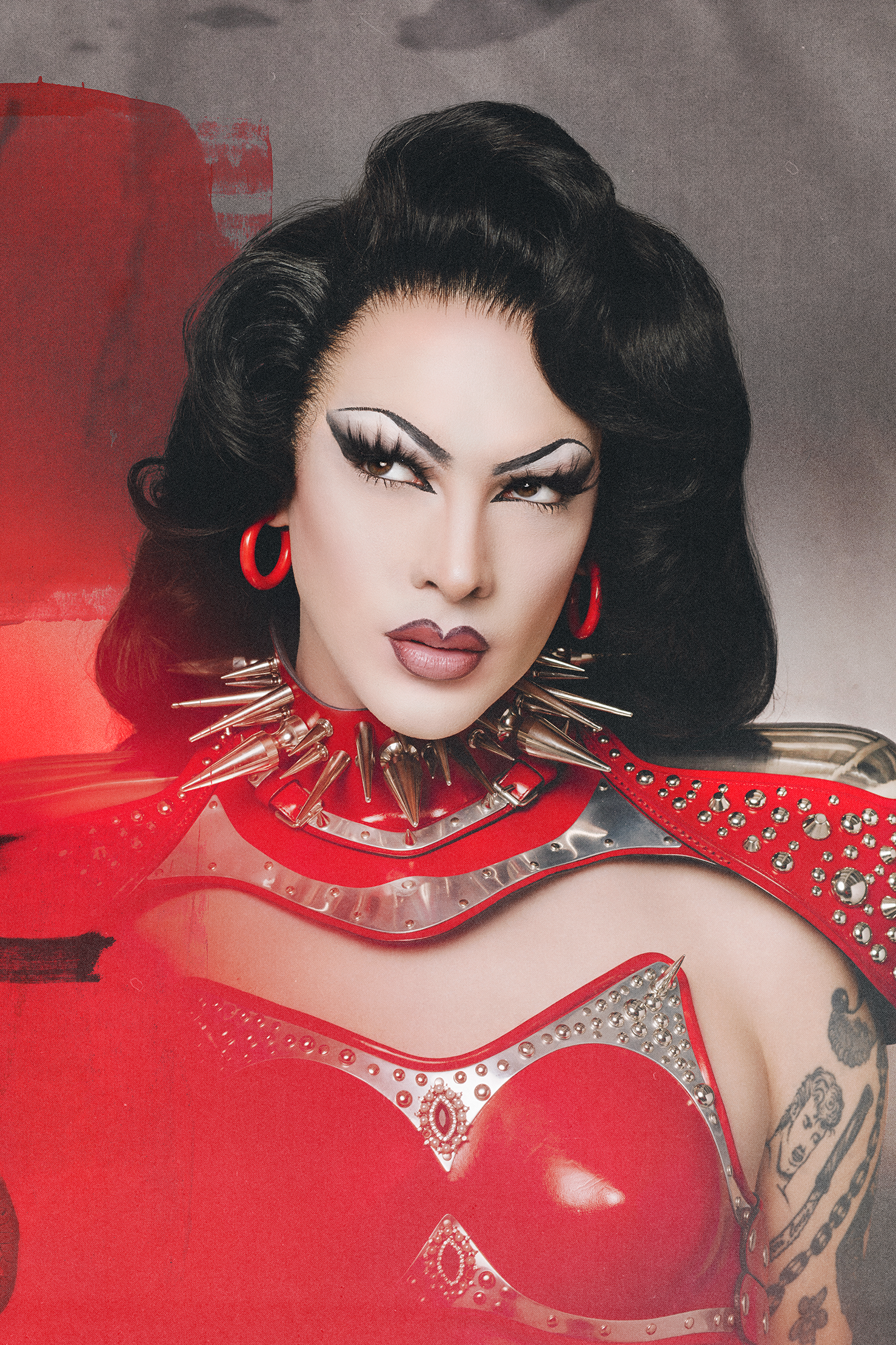
Bra, briefs and shoulder piece: Cecilio Castrillo @ceciliodesigns
That punkness got bigger with the rooms Violet began to occupy. The same instinct that drove her to alter a uniform followed her into the most rarefied spaces: the Werk Room, fashion houses, the Met Gala. Rooms built on legacy, exclusivity, expectation. “I still feel that… I shouldn’t be there. And that’s what makes it exciting.” To arrive in those spaces not quietly, but deliberately. To be seen, not as an exception, but as a presence that refuses to be negotiated and almost infiltrates—with style, with control, with an understanding of exactly what is being disrupted. “I like showing up and being loud,” she adds.Loud, for Violet, is precise. A controlled amplification of self that operates on multiple levels at once. The body becomes architecture. The performance becomes a study in tension: between restriction and release, between spectacle and discipline. “Drag is about amplifying certain parts of myself,” she notes. “You have to go into this… aggressive confidence.” And yet, beneath that amplification, there is another mode of creation. Quieter. More introspective. The hours spent designing, constructing, envisioning. A different kind of confidence. One that builds worlds tailor-made for a global audience. She calls it “a more self-reflective confidence.”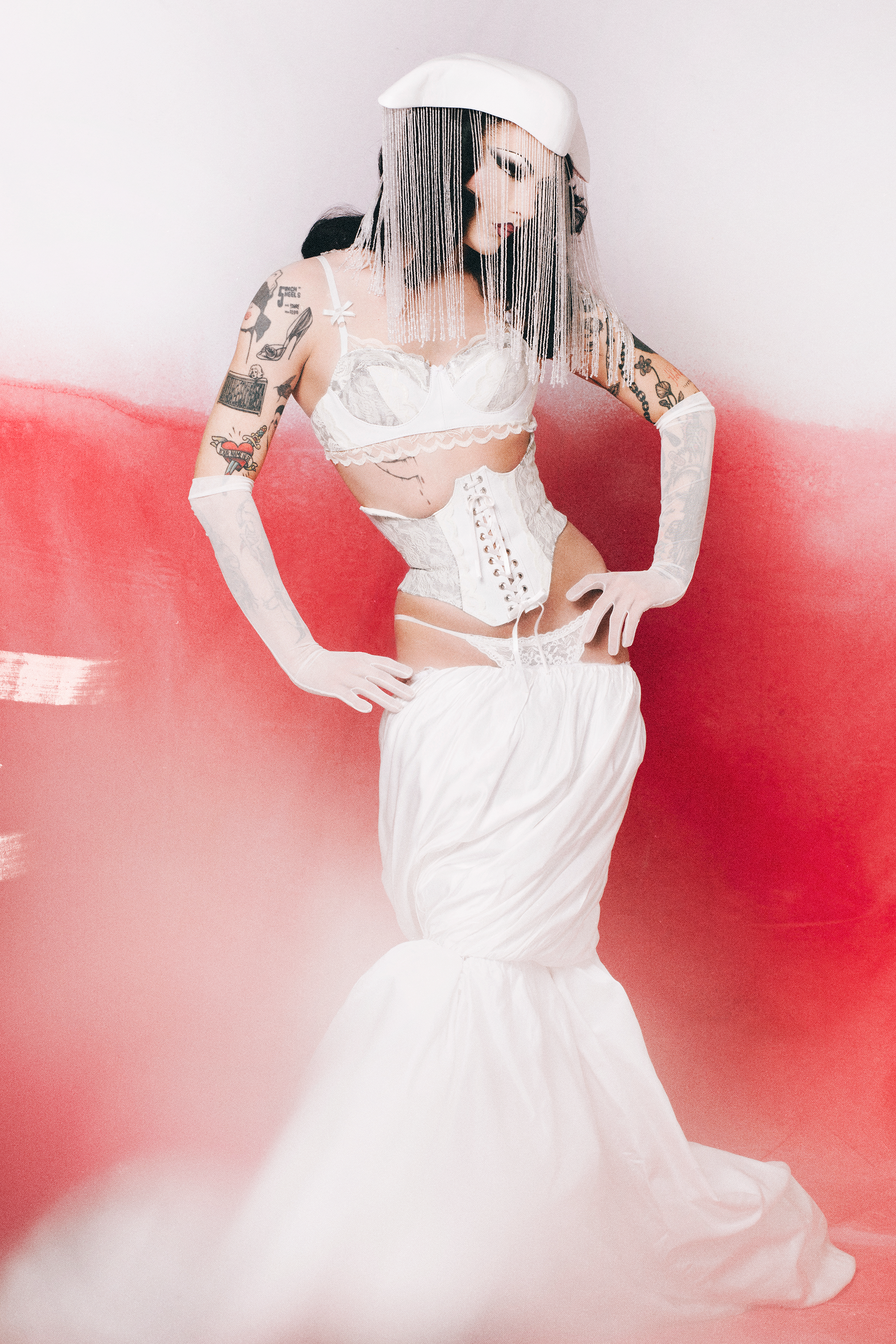
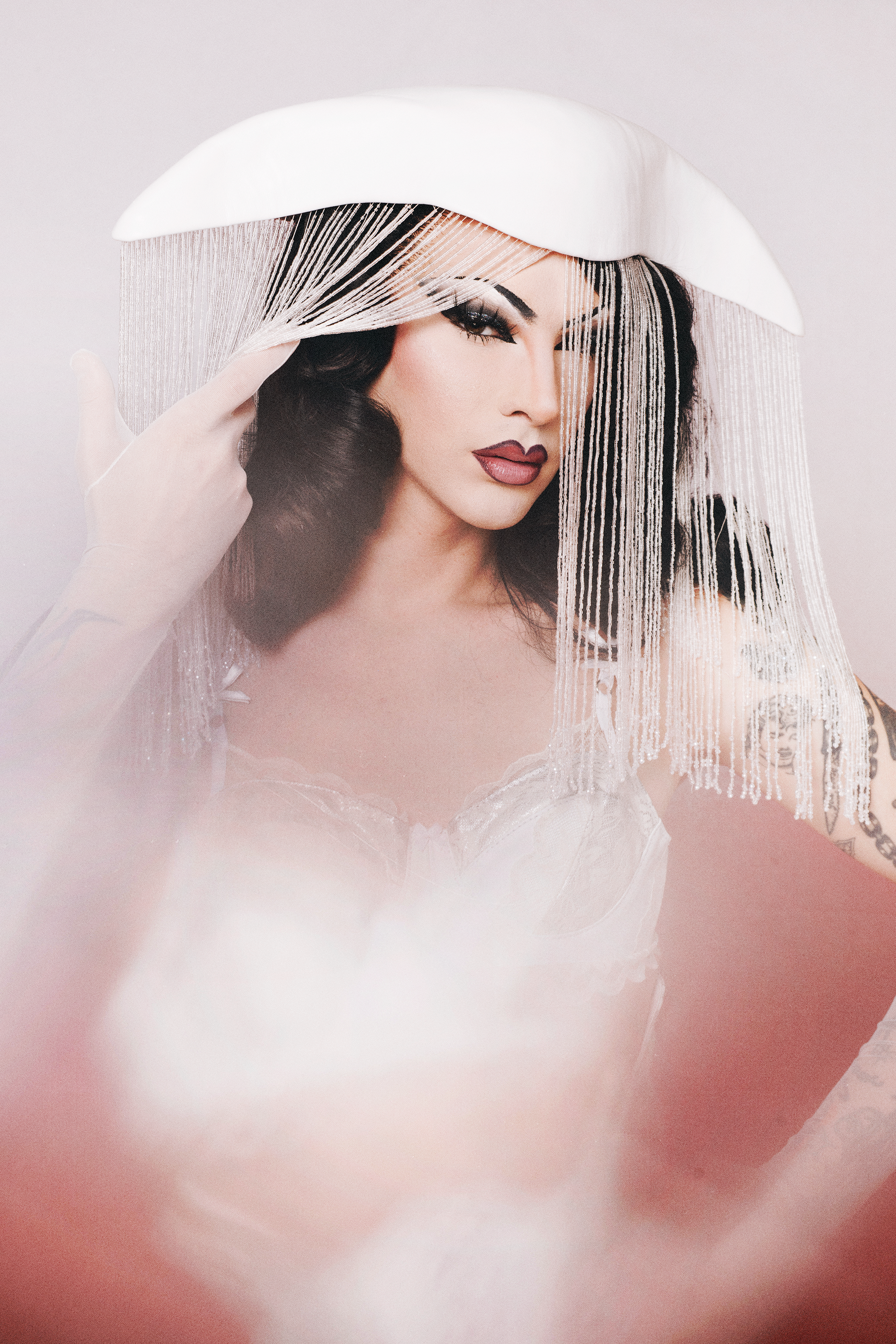
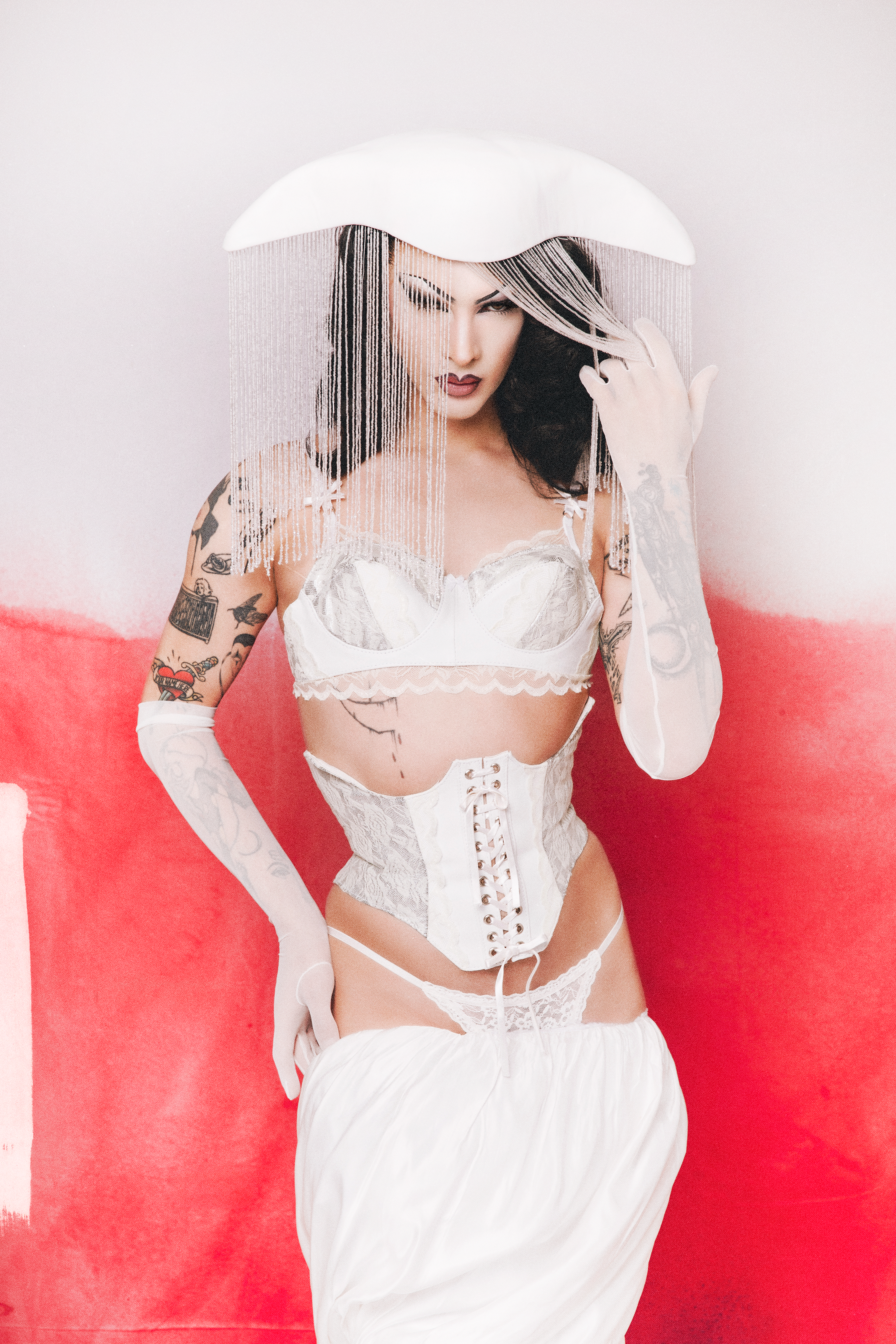
Hat: Luis De Javier @luisdejavier | Corset: DOMINNICO @dominnico | Heels: Le Silla @lesilla | Thong: Victoria’s Secret @victoriassecret | Skirt: Luis De Javier @luisdejavier | Gloves: C’est Jeanne @cest_jeanne
This duality, between the public and the private, the amplified and the internal, defines Violet’s relationship to her own identity. There was a time when drag felt like the truest version of herself, when the lines between persona and person blurred to the point of collapse. “I used to feel the most like myself in drag.” But becoming, as she has learned, is not fixed. “That’s changed,” she says. “Now I feel most like myself when I’m out of drag.” It is through this expansion that she understood identity is anything but singular. That it can hold multiple truths at once without needing to resolve them. For Violet, a very special phrase has become both a truth and a permission: “I exist in multitudes.” To be varied is to be human."I still feel that I shouldn't be there. And that's what makes it exciting."
And it is within that humanity that Violet finds her current center of gravity, not in proving something, but in exploring what comes next. Having reached a level of visibility and success that once felt unimaginable, she is turning back toward the origins of her curiosity. Fashion. Design. And increasingly, music. “The dance floor is where I feel the most free.” Music, for her, is not just sound. It is connection. A space where identity dissolves into movement, where bodies exist in proximity without hierarchy. Where hearts beat in sync—to a primordial bassline and to one another. Where queerness needs no explanation. 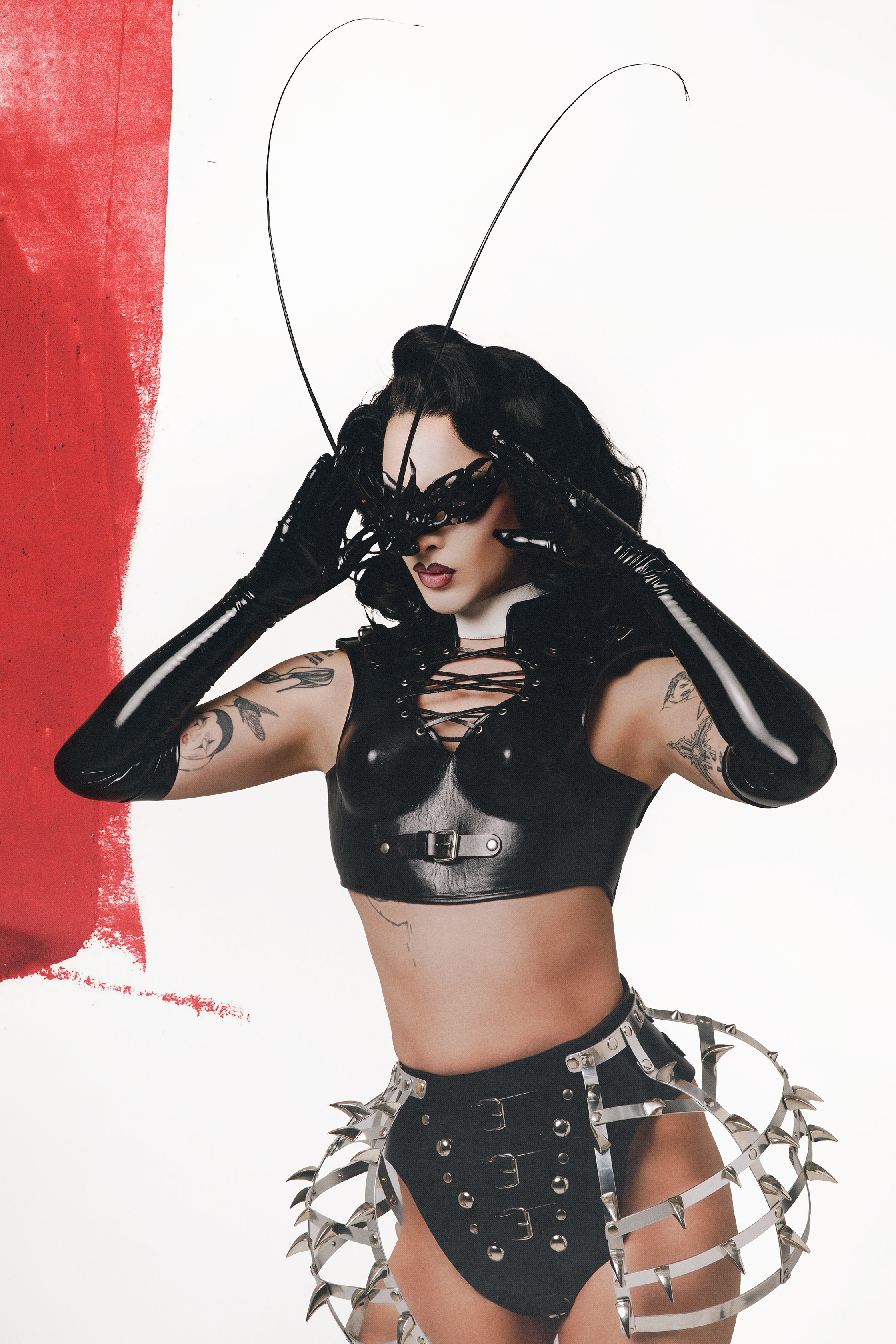
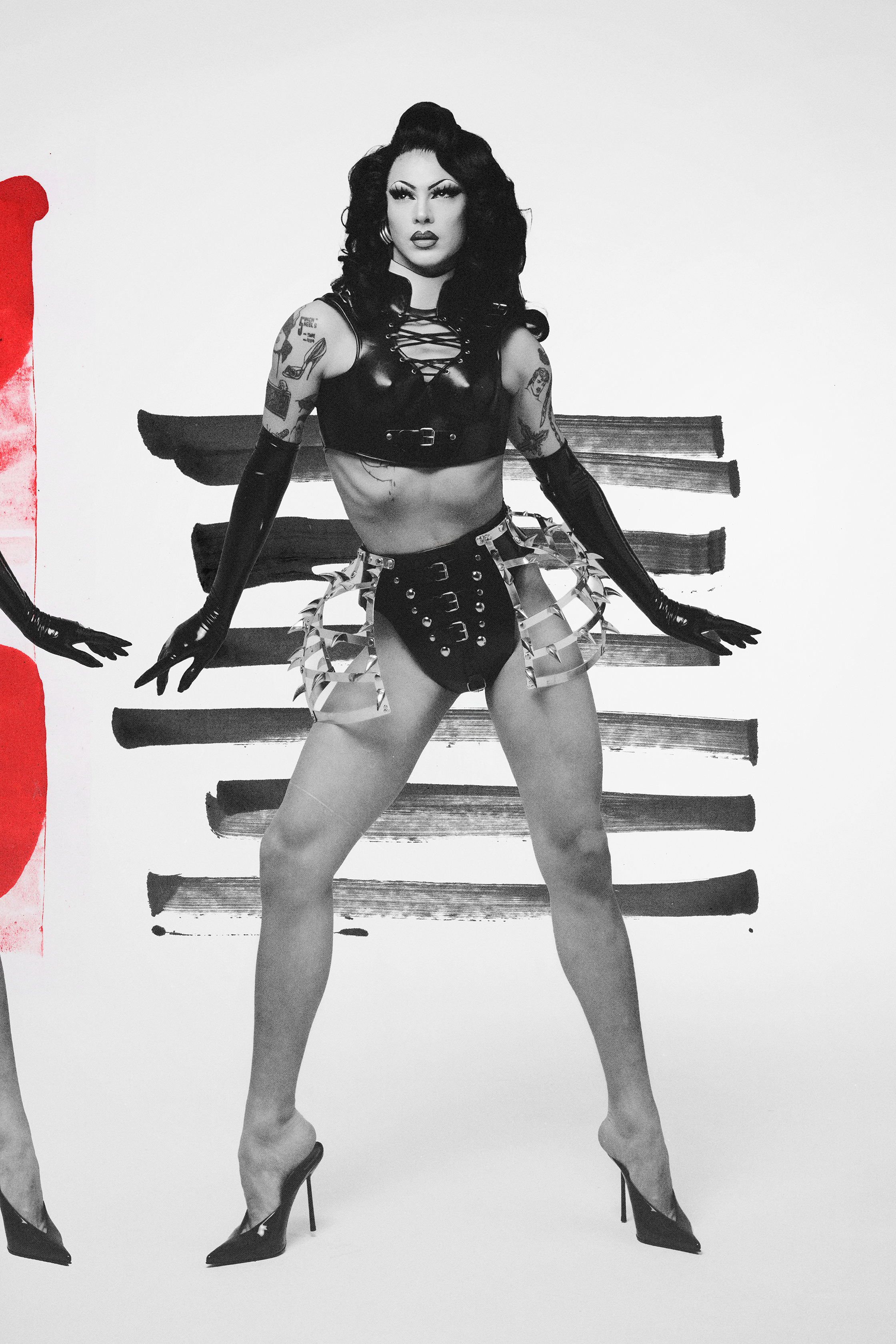
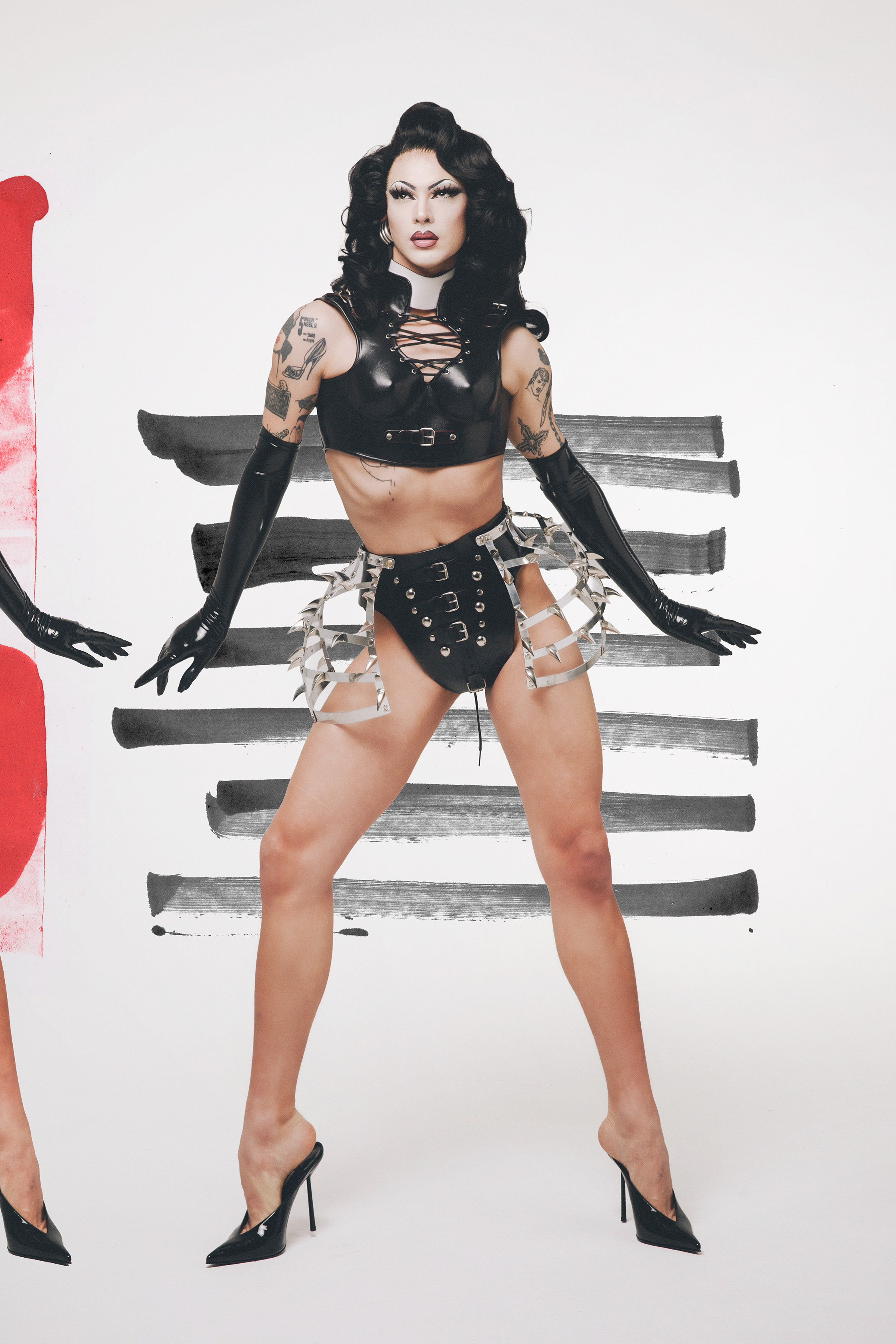
Black top and bottom: Cecilio Castrillo @ceciliodesigns | Heels: Le Silla @lesilla | loves: C’est Jeanne @cest_jeanne | Mask: Krisztian P. @krisztiann
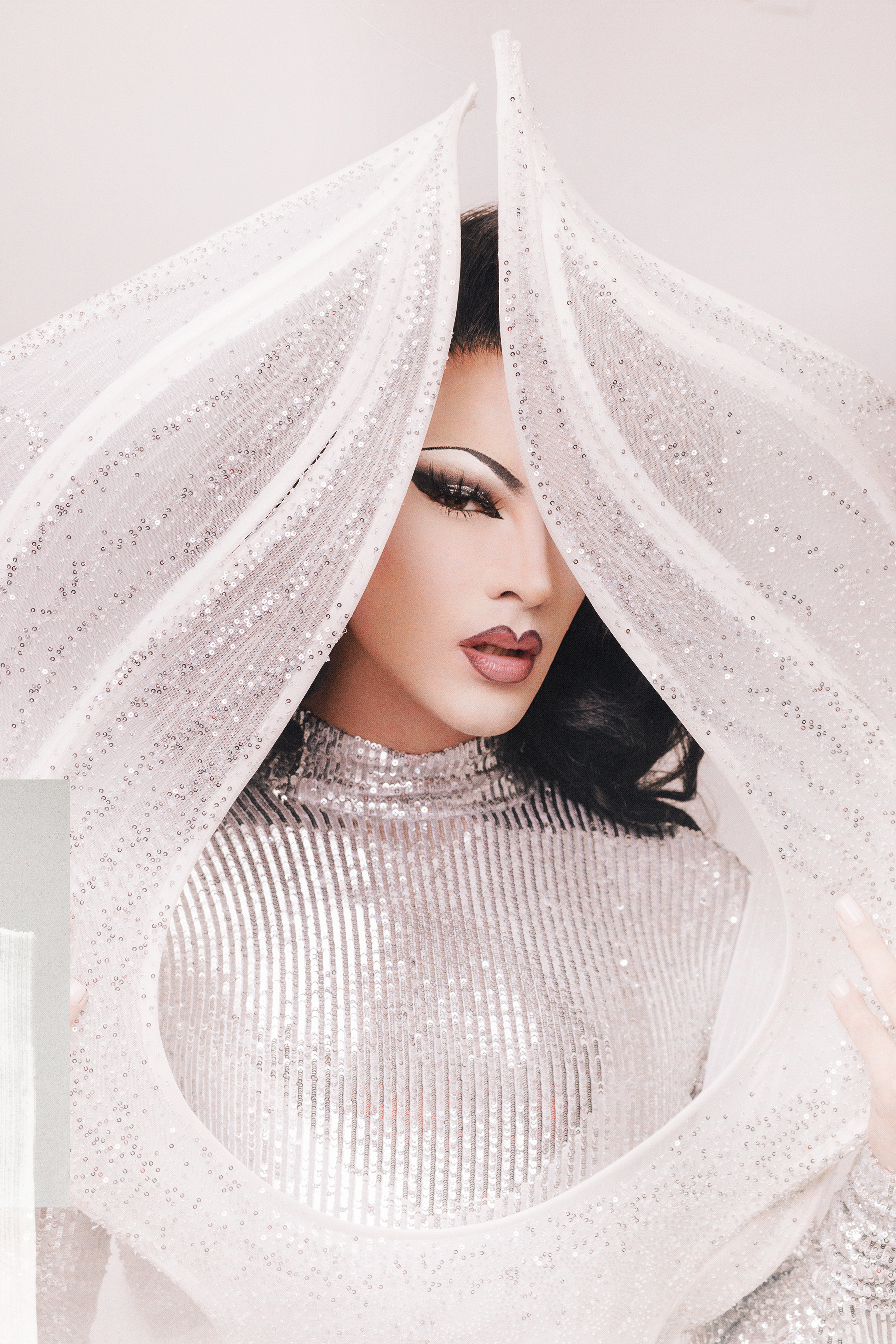
Full look: Rahul Mishra @rahulmishra_7
There is a sense, in the way she speaks about it, of return. Perhaps to a time, but more to a feeling. The same feeling that once existed in the early internet, in underground clubs, in the first moments of recognition that there were others like her. A belief that those spaces, physical, collective, unmediated, will continue to evolve. “Dance floors have always found a way,” she offers, and the sentiment carries memory. Queer culture has always been adaptive, always found new ways to exist, to gather, to create."I exist in multitudes."
And Violet, as ever, intends to be at the center of that movement. Not by asking for space, but by taking it. Expanding it. Redefining it. From a neon green stitch in a gray uniform to the architecture of a global icon, the throughline remains the same: a refusal to disappear, a commitment to becoming, and the understanding that queerness, at its most powerful, is not just about being seen, but about being impossible to ignore.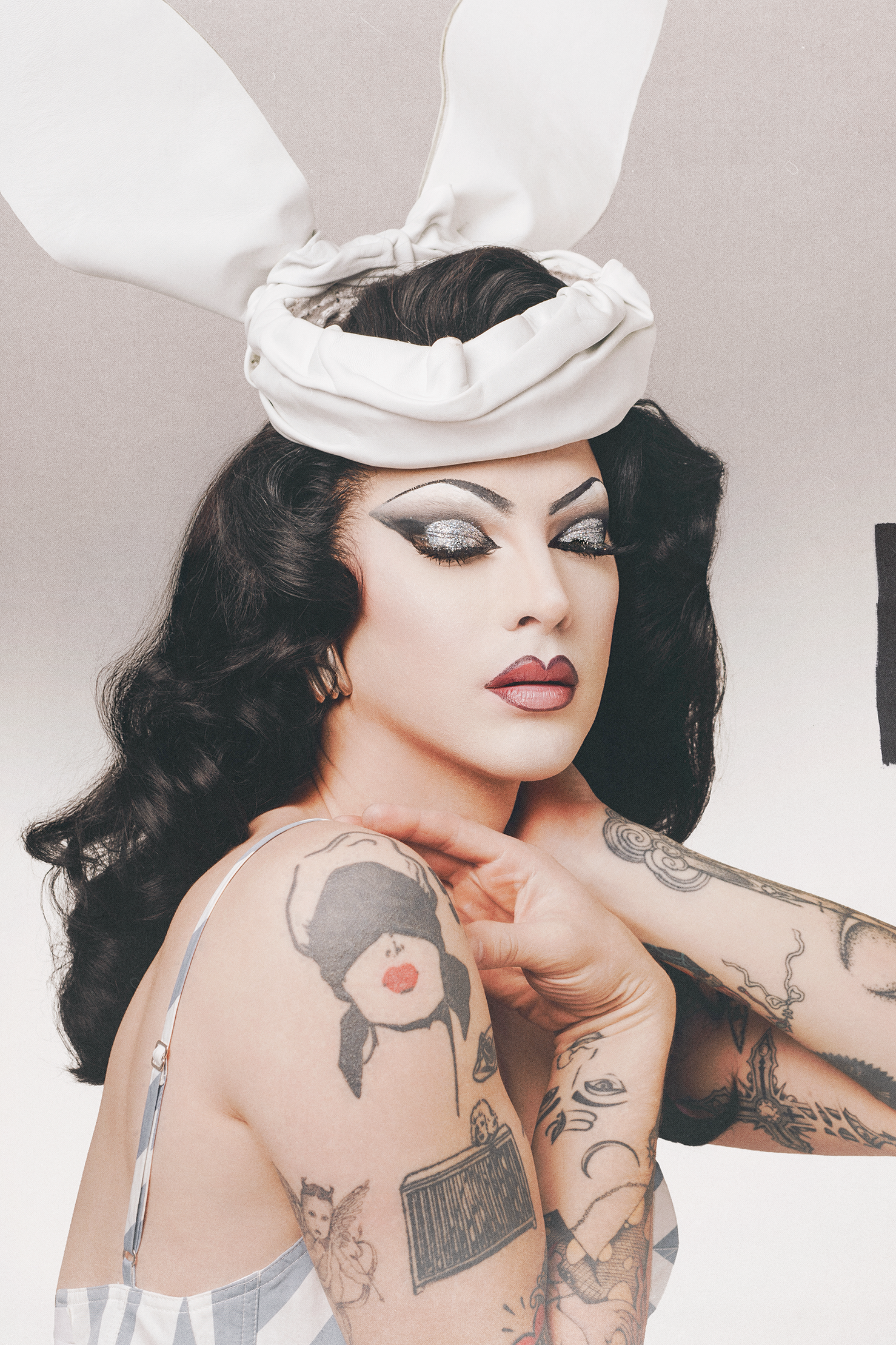
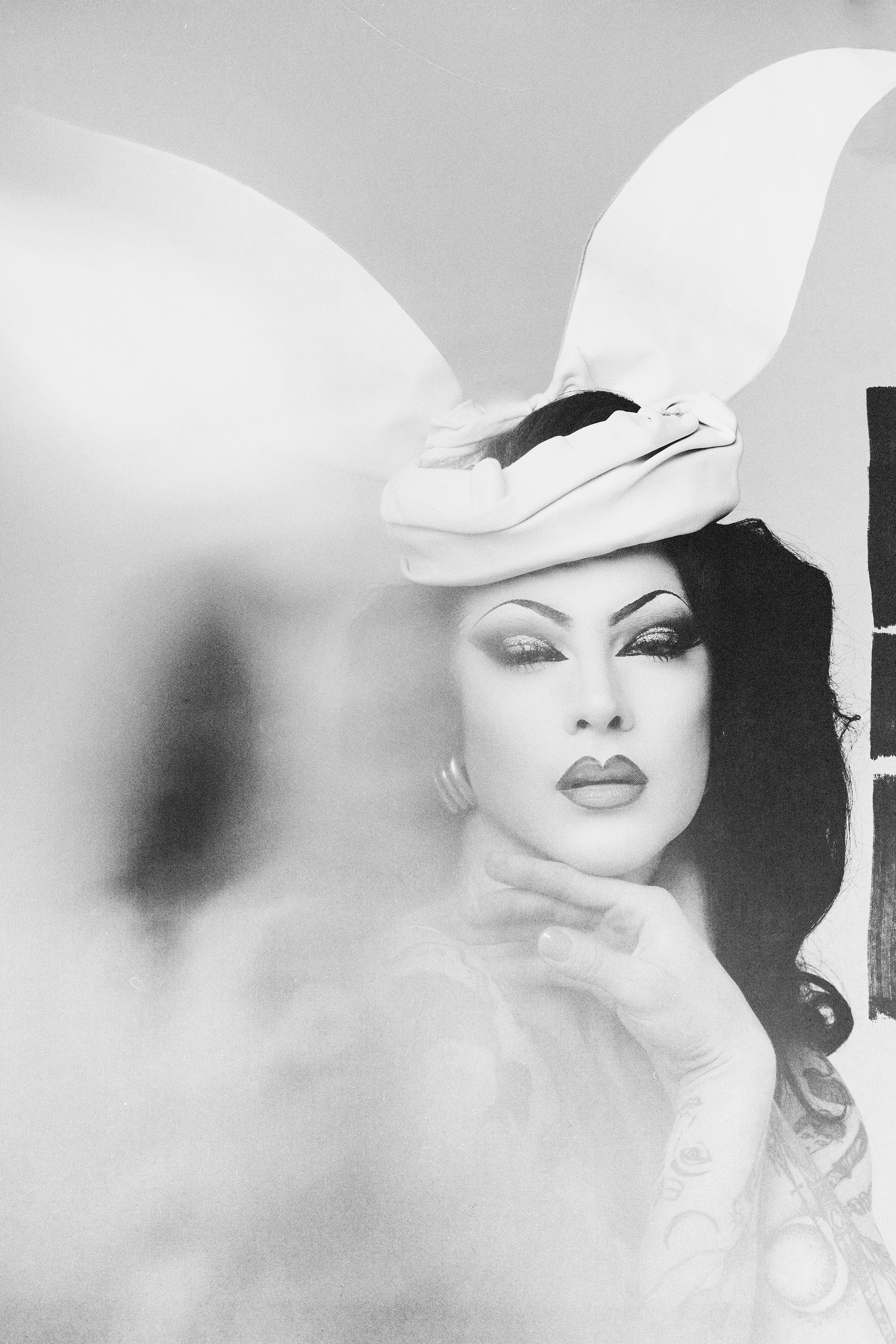
Full look: Palomo Spain @palomospain
Credits
Story: Ankur Ahuja @ankur.amorPhoto: Gonza Gallego @gonzagallegoHuman: Violet Chachki @violetchachkiStyling: Hakim Youssif @thehakiim, Hussy ElCeliemy @elceliemyHand painted backdrops: Lucho Campos @luchocampos_Creative Producers: Victoria Monique @labarbiecalva, Tom Pipol Escobar @tompipol and Ankur Ahuja @ankur.amorAssistant Creative Producer: Ray Garo Seferian @uprooted_verse